Former House Speaker Dennis Hastert dies at 84 in Plano, Illinois

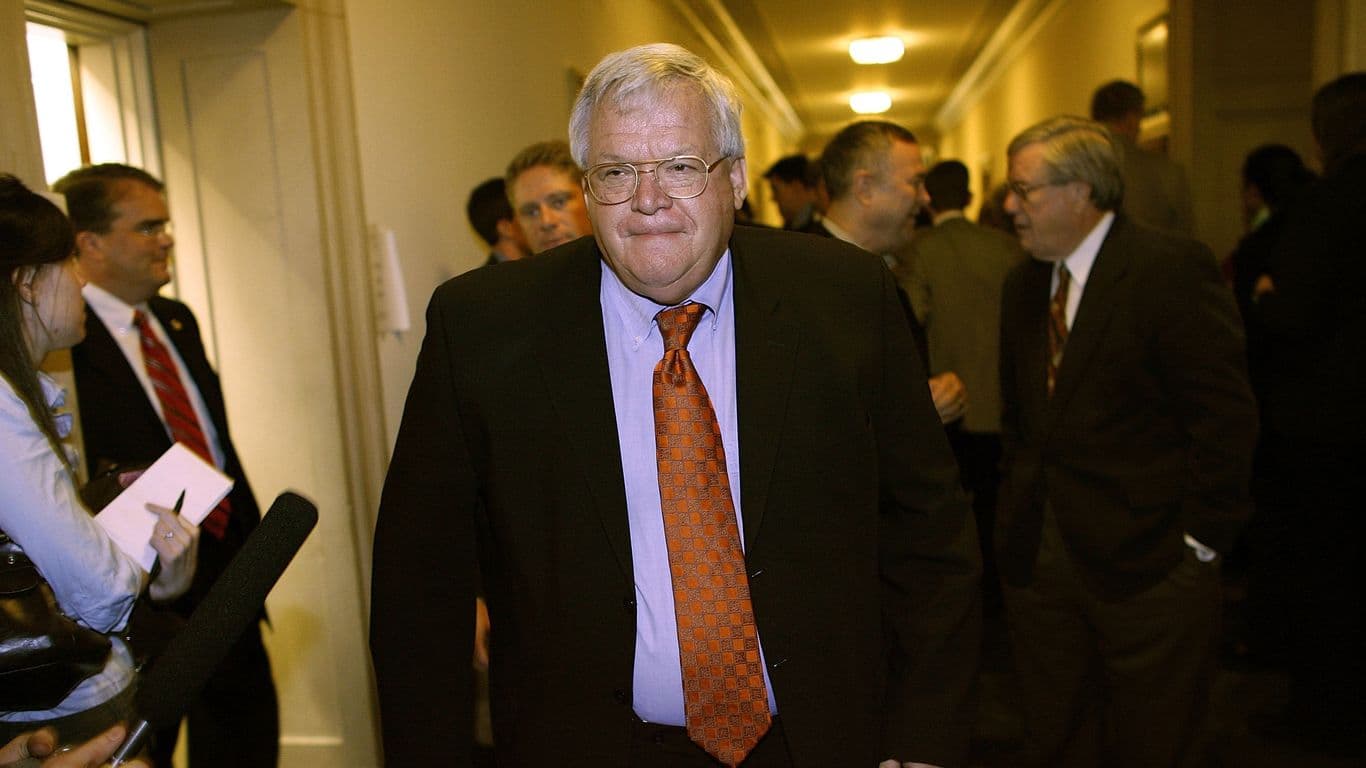
Dennis Hastert, the longest-serving Republican speaker in U.S. House history, died Saturday at his home in Plano, Illinois. He was 84.
The Kendall County Coroner's Office said Hastert died while under hospice care. He is survived by his wife, Jean Kahl, and their two sons.
Hastert was the highest-ranking elected official in U.S. history to serve time in federal prison. His political downfall came after prosecutors revealed that he had sexually abused teenage boys while working as a high school teacher and wrestling coach.
He pleaded guilty in 2015 to one count of illegally structuring cash withdrawals to evade federal reporting requirements. Prosecutors said the withdrawals were tied to payments he made to conceal past sexual abuse.
According to his plea agreement, Hastert paid an unnamed individual $1.7 million between 2010 and 2014 after that person confronted him about past misconduct. Court proceedings later showed that he paid hush money to cover up abuse of boys from his time at Yorkville High School.
Prosecutors alleged that Hastert molested at least four boys, some as young as 14. He was never charged with sexual abuse because the statute of limitations had expired.
He was sentenced to 15 months in federal prison and was released in 2017 after serving 13 months.
Hastert was born in Aurora, Illinois, on Jan. 2, 1942. He attended Wheaton College and earned a master's degree from Northern Illinois University before teaching and coaching at Yorkville High School.
He entered politics in 1980, winning a seat in the Illinois House of Representatives. He served there until 1986, then won election to the U.S. House, where he remained from 1987 to 2007.
Hastert became speaker in 1999 after Newt Gingrich resigned and the expected successor, Bob Livingston, withdrew. That made him a compromise candidate, and he was often called the "accidental speaker."
As speaker, Hastert led the House through the aftermath of the Sept. 11 attacks and through much of President George W. Bush's first years in office.
His name also became attached to an unwritten practice known as the Hastert Rule. Under that approach, a speaker brings a bill to the floor only if a majority of the majority party supports it.
Critics said the rule sharpened partisanship by keeping bipartisan bills from reaching a vote when they lacked support from most members of the majority party.
After Hastert left Congress, he became a highly paid lobbyist until his indictment. His death closes a career that moved from local Illinois classrooms to the center of national power, then ended in criminal conviction and public disgrace.