Governor JB Pritzker signed a disaster proclamation making 15 Illinois counties eligible for storm recovery funding.
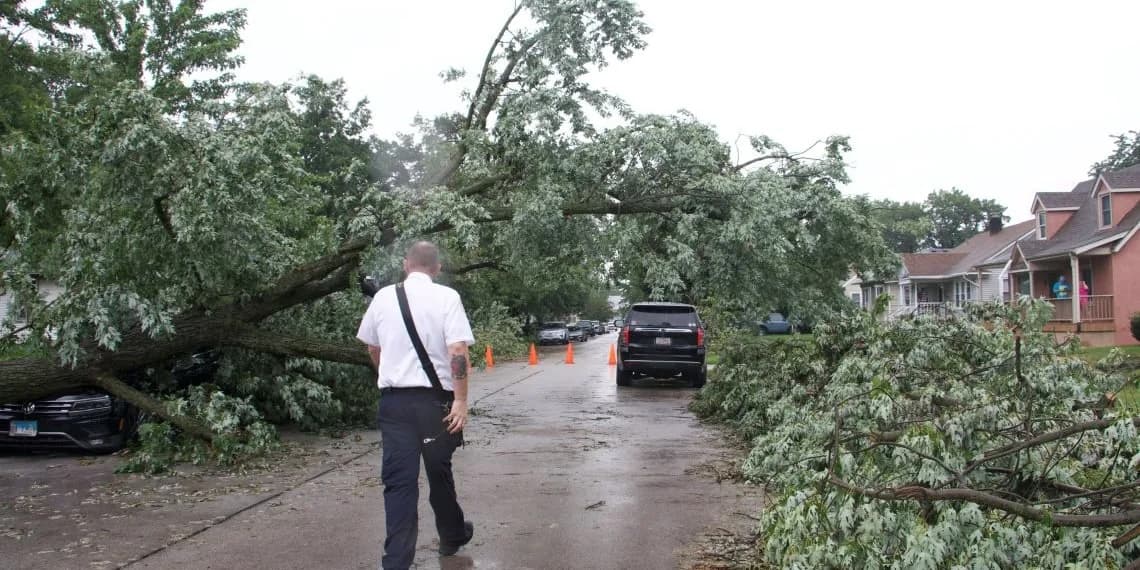
Governor JB Pritzker signed a state disaster proclamation on Aug. 18 covering 15 Illinois counties, including Cook, DuPage, Lake and Will, hit by severe storms in recent weeks. The proclamation lets local governments apply for up to $250,000 each in disaster relief funding through the Illinois Department of Commerce and Economic Opportunity for debris removal and infrastructure repairs. Individual homeowners are not covered under this program and must seek assistance through FEMA instead.
Gov. JB Pritzker signed a disaster proclamation Tuesday that opens up state recovery funding to 15 Illinois counties hit by weeks of severe storms, including Cook, DuPage, Lake and Will counties in the Chicago area.
The proclamation took effect immediately and allows local governments in the affected counties to apply for up to $250,000 each in disaster relief grants through the Illinois Department of Commerce and Economic Opportunity. The money is meant to cover debris removal and repairs to roads, bridges and other public infrastructure damaged by the storms.
"I know these storms have impacted countless Illinois families and requires we band together to help them recover," Pritzker said in a statement announcing the proclamation. "As this relentless and unprecedented weather continues to wreak havoc across our region, I remain committed to ensuring those impacted get the resources and help they need."
The funding comes through the Community Development Block Grant program, which is financed by the U.S. Department of Housing and Urban Development. It is not available to individual homeowners or renters looking to repair storm-damaged property. Those residents have to apply separately through the Federal Emergency Management Agency.
Local governments have six months from the Aug. 18 proclamation to submit their funding applications.
Beyond the grant money, the proclamation clears the way for the state to send personnel and equipment to help with cleanup if local officials request it. It also loosens standard procurement rules so counties and municipalities can buy specialized cleanup equipment faster without going through the usual bidding process.
The 15 counties covered are Alexander, Champaign, Cook, DuPage, Ford, Fulton, Kane, Lake, LaSalle, Marshall, McLean, Pulaski, Tazewell, Vermilion and Will.
The proclamation follows a visit Pritzker made last week to Lansing, where he toured neighborhoods hit by storm damage and signed a separate bill aimed at helping Chicago homeowners get financial relief for flood damage. That legislation grew out of severe flooding on the Southwest Side of Chicago last summer, which left many residents dealing with damaged basements and property with limited options for recovering the cost.
The proclamation follows an unusually active stretch of weather for Illinois this year. The state has recorded more than 200 tornadoes so far, a total that as of mid-August put it well ahead of every other state in the country. Indiana, which had the next-highest count, had recorded fewer than 100 confirmed tornadoes by the same point, according to weather data cited by local broadcasters.
That pattern has repeated itself across the summer: heavy rain events followed by flash flooding, then more storms rolling through before communities finish cleaning up from the last one. Lansing, a south suburb near the Indiana border, was among the hardest hit in mid-August, with downed trees, damaged roofs and standing water reported across several blocks.
Fulton, Marshall and Pulaski counties, which are more rural, are on the list alongside Cook, DuPage, Lake and Will, the four Chicago-area counties included in the proclamation. Suburban townships and municipalities in those counties can apply for the same reimbursement covering storm cleanup and public infrastructure work.
The governor's office has not said how much total funding is expected to be distributed statewide once applications come in, since the amount depends on how many communities apply and the scope of damage each reports. Local officials in the affected counties now have until mid-February to file their applications with DCEO.