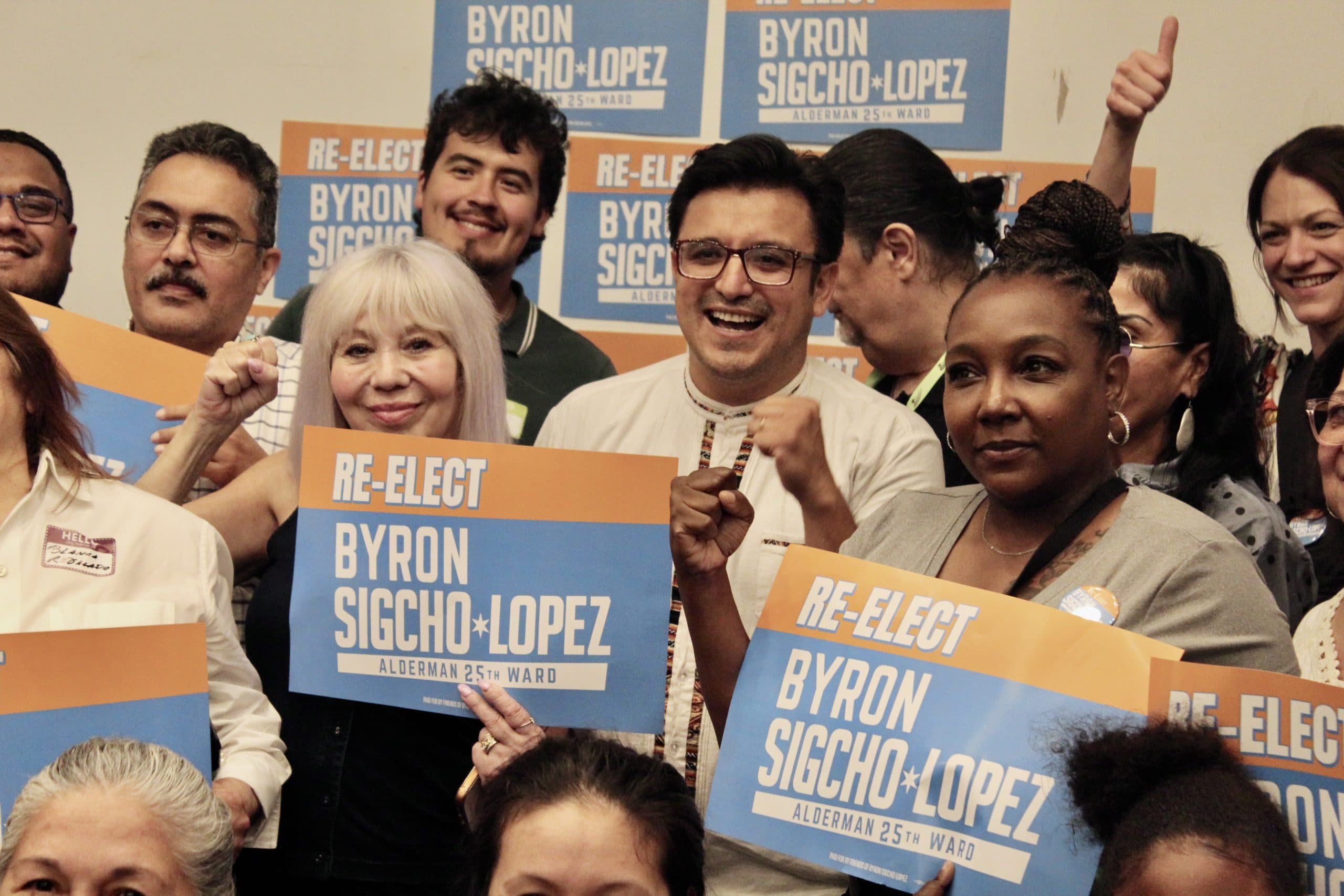
Mayor Brandon Johnson faced boos and chants at a South Chicago town hall after declining to withdraw his support for the $9 billion Quantum Shore computing campus.
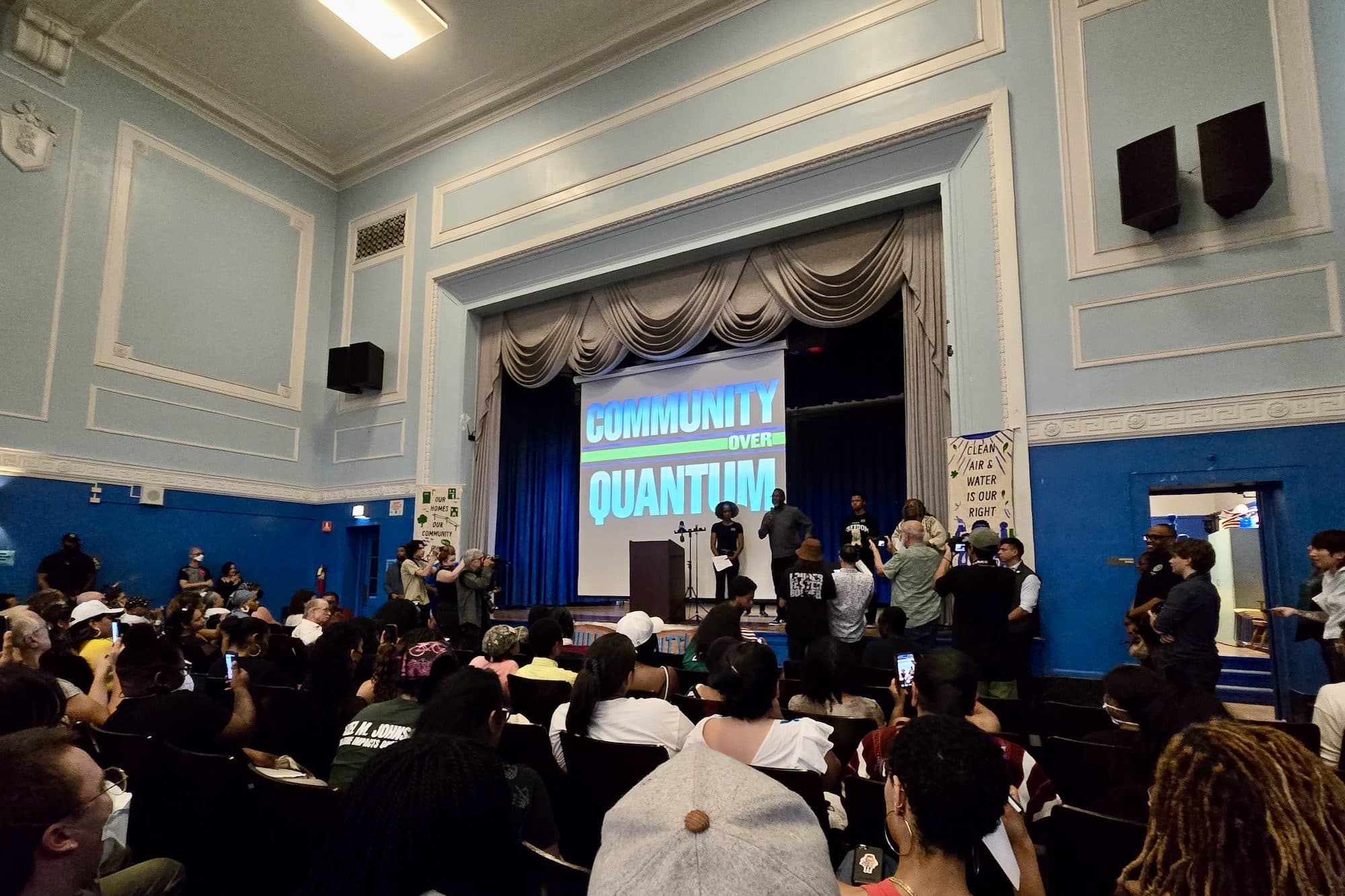
Mayor Brandon Johnson attended a town hall in South Chicago on Aug. 15, 2026, where residents chanted for him to reverse permits and shut down the $9 billion Quantum Shore development planned for the former U.S. Steel South Works site. Johnson did not withdraw his support for the project but pointed to a recent executive order creating new regulations for data centers in Chicago. The 128-acre quantum computing campus, led by developer Related Midwest, has drawn backing from Gov. JB Pritzker and Cook County Board President Toni Preckwinkle, along with $500 million in state funding and an estimated $175 million in county tax breaks over 30 years.
Mayor Brandon Johnson walked into a gymnasium at Arnold Mireles Academy on Saturday to face a room that wanted one thing from him: a reversal. He left without giving it to them, and the crowd let him know how they felt.
The town hall, called "Community over Quantum" and organized by the advocacy group Southside Together, drew South Chicago residents angry over the $9 billion Quantum Shore development planned for the old U.S. Steel South Works site. Some attendees chanted "Reverse the permits. Shut it down. Mayor Johnson, do it now" as the mayor sat before them at the school, 9000 S. Exchange Ave.
Johnson did not reverse his support for the project. Instead, he repeated his call for a moratorium on new data centers citywide and pointed to an executive order he signed last week that sets new regulations and reviews for data centers in Chicago.
"Here are my values: That innovation cannot take place at the expense of environmental justice, that development cannot happen at the expense of utilities and working people, and that private investment cannot happen at the expense of our overall public health," Johnson told the crowd. He said the executive order strengthens the city's procurement and regulatory processes to put community interests first.
That answer did not satisfy the room. As Southside Together member Lia Terrell took the microphone to criticize the mayor's position, Johnson got up and left the event, and boos and jeers followed him out.
"The reality is that we don't have the mayor's support," Terrell said afterward. "The data center executive order is not the same thing as stopping the quantum facility, which means he doesn't support the needs of the people in the community, and he doesn't respect the needs of Chicago as a whole. He's chosen to stand on the side of military-backed billionaires."
The project at the center of the dispute is a 128-acre campus for quantum computing research, part of the larger Quantum Shore Chicago development that developer Related Midwest is building on the former steel mill site. Related Digital, a related entity, announced last March that it would build a hyperscale data center for AI and cloud computing at the north end of the property.
Companies and institutions tied to the project include PsiQuantum, IBM and Infleqtion, along with the federal Defense Advanced Research Projects Agency and several Illinois universities. Backers say the campus could produce the world's first quantum computer built for practical, everyday use. Quantum computing has long been promised as a technology that could move beyond laboratory experiments into real-world applications.
The development has secured support well beyond Johnson. Gov. JB Pritzker, Cook County Board President Toni Preckwinkle, and Alds. Peter Chico (10th) and Greg Mitchell (7th) have all backed the project. State funding for the campus totals $500 million, and Cook County has approved a property tax break estimated at $175 million over 30 years. Johnson has separately pledged $5 million to the project from the city's housing and economic development bond program.
Southside Together has protested the development since last year, arguing it threatens to raise utility bills across the region and could push out longtime residents through rising costs and redevelopment pressure. The group also questions who stands to benefit from the billions of dollars flowing into the project, arguing that promises of jobs and technological advancement have not been matched by binding commitments to the neighborhood.
Johnson's executive order, signed days before the town hall, requires new environmental and community reviews for data centers seeking to operate in Chicago and calls for a citywide moratorium on approving new ones. City officials have described it as a response to growing concern over the power and water demands of data centers, which have multiplied across Chicago in recent years. Residents at Saturday's town hall said the order does nothing to stop the Quantum Shore project itself, since permits and agreements for the South Works site were already in motion before the order took effect.
No timeline has been set for when the quantum campus would break ground beyond the initial site work that began last fall. Southside Together said it plans to keep pressing city and county officials for a public accounting of the project's environmental review and utility impact studies before construction moves further along the South Works site.