University of Chicago Law School to Ban Phones and Laptops in First-Year Classes to Fight AI Reliance
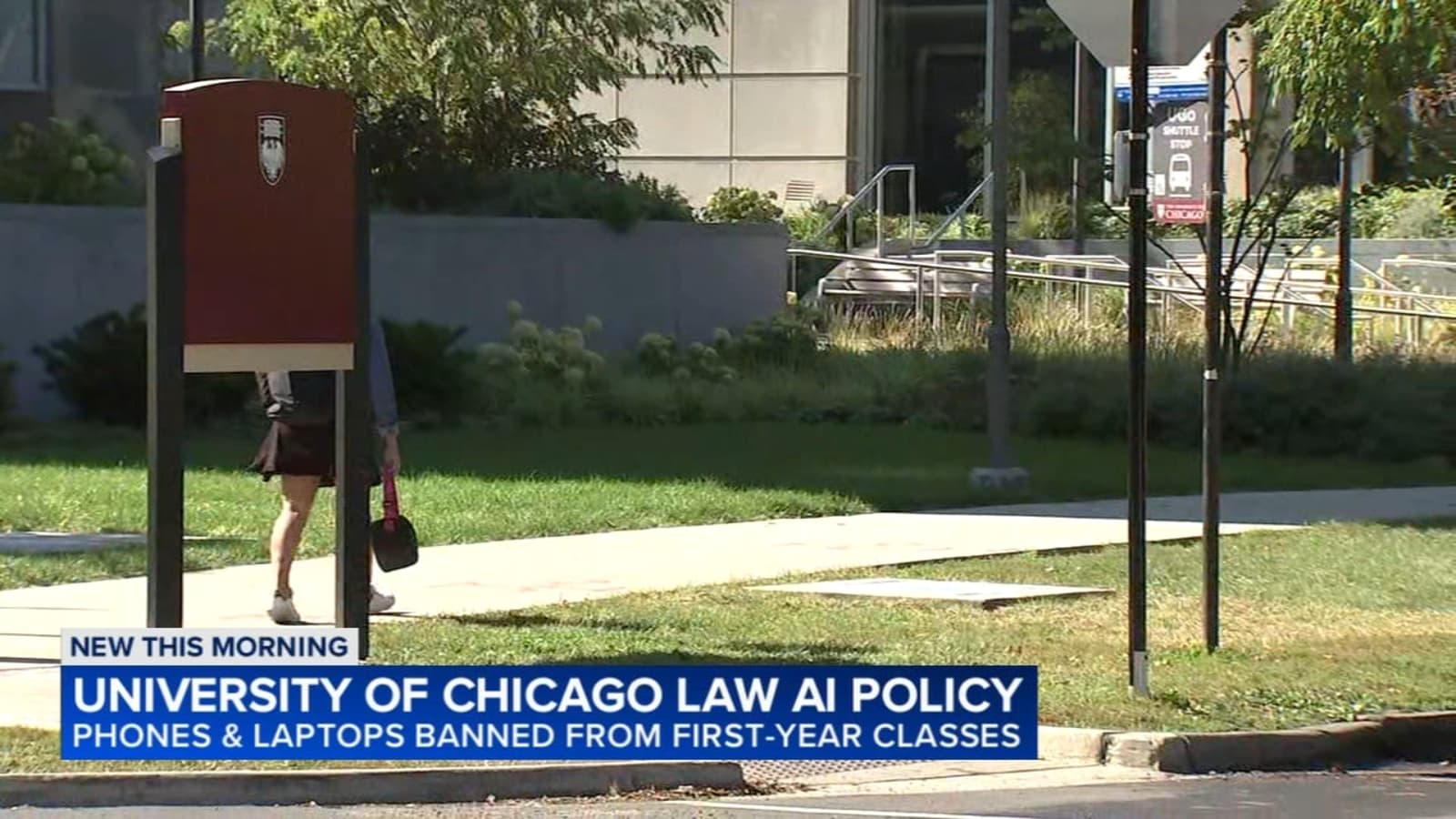
The University of Chicago Law School is taking phones and laptops away from its newest students.
Starting this fall, first-year law students at the school will be barred from using phones, tablets and laptops during class. The university says the policy is meant to curb the use of artificial intelligence in the classroom and push students to develop their own reasoning skills rather than outsourcing them to a chatbot.
The law school formed an AI committee in 2023 to study how generative tools were showing up in coursework and how the school should respond. That committee gathered feedback from faculty and students over the past two years, and much of it pointed to the same worry: students were leaning on AI to draft arguments, summarize cases and answer questions instead of working through the material themselves. The new device ban for first-years is the school's answer to that concern.
The policy applies specifically to incoming 1Ls, the students just starting their legal education, who will do without screens during regular class sessions. The law school says students at the earliest stage of training need to build critical thinking and independent analysis before they're allowed to bring AI tools into the mix. That means note-taking by hand, no scrolling for outside information mid-lecture, and no quick AI-assisted answers when a professor calls on someone.
The restriction eases up for upper-level students. The school plans to teach AI as part of the curriculum, but only in advanced courses for second- and third-year students who have already gone through the fundamentals without a screen in front of them. Faculty teaching electives at that level will have room to set their own rules, deciding for themselves whether and how AI tools fit into their classes.
Even with that flexibility, one rule holds across the board: no phones or laptops during exams, no matter the year or the course. Testing conditions stay locked down regardless of how permissive an individual professor's policy might be for regular class sessions.
The policy isn't absolute. Professors can still assign a student to use a laptop or tablet specifically for note-taking in a given class, allowing for cases where a screen serves a clear academic purpose rather than a shortcut. Students with disabilities who require accommodations are also exempted from the ban.
The University of Chicago is one of a number of law schools addressing how generative AI tools have changed coursework over the past few years. Programs that can draft a legal brief, summarize case law or answer exam-style questions in seconds have pushed law schools to reconsider how they test whether students understand the material rather than have simply prompted their way to an answer. Legal training depends heavily on students learning to reason through ambiguous fact patterns on their own.
The University of Chicago isn't banning AI outright. Instead, the school is delaying student use of it, restricting the technology to upper-level courses after students complete their first year without it. The law school's policy allows AI instruction in advanced classes because practicing lawyers already use the tools for research and drafting.
The policy leaves room for individual professors to set their own AI rules in elective courses, and the law school hasn't said whether it will expand the device ban beyond first-year classes. The rule takes effect when the fall semester begins.