Chicago Startup Tests Phone App That Listens for Gunshots in Two Wards
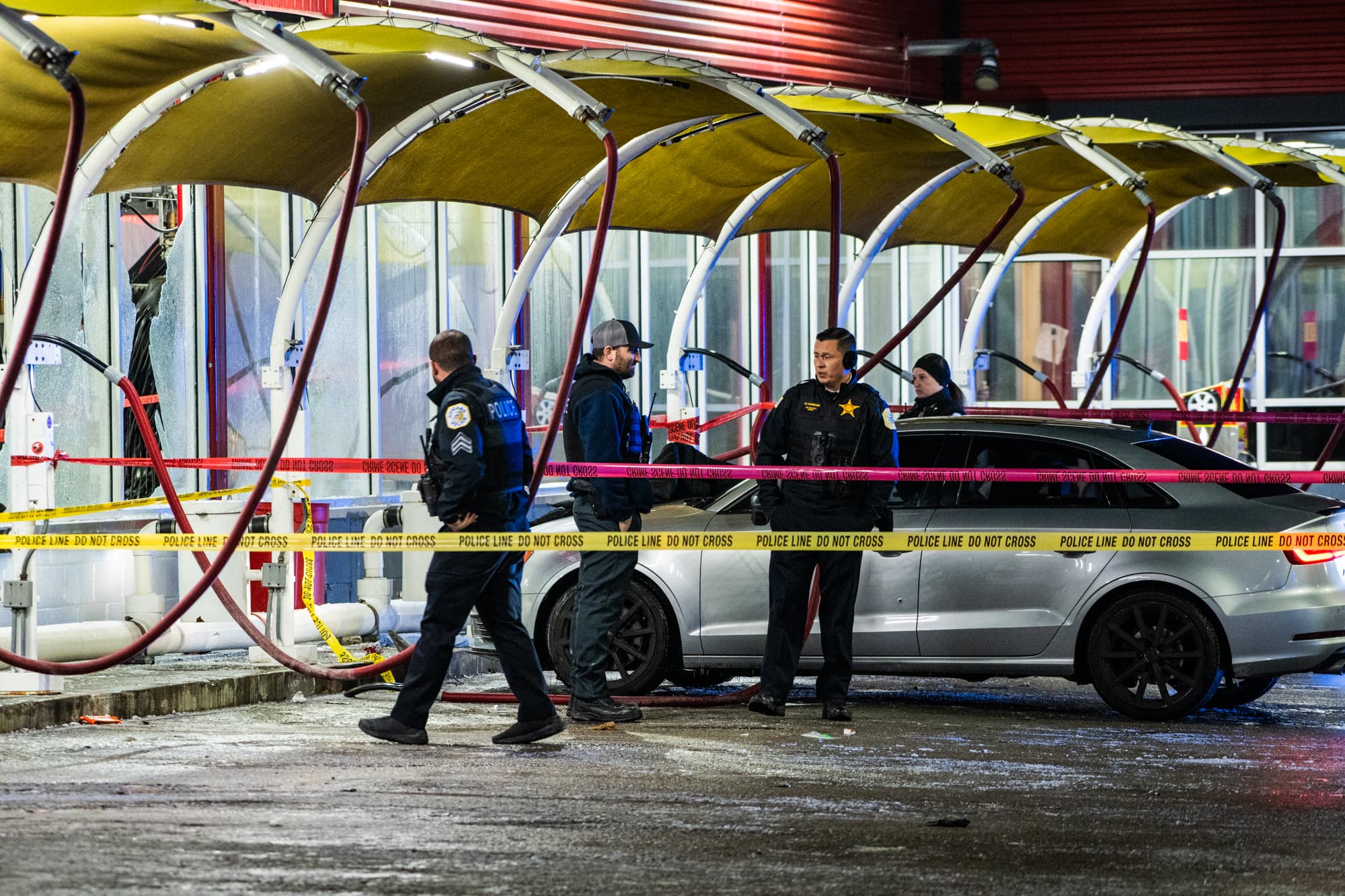
A smartphone in someone's pocket or sitting on a counter, rather than a sensor mounted on a streetlight, could soon be what tells a Chicago resident that gunfire just went off nearby.
That's the idea behind SplitSec, an app from a Chicago-area startup now being piloted in two City Council wards. The company is running free, two-month trials with 16 participants in the 21st Ward on the Far South Side and 12 participants in the 42nd Ward, which covers Downtown and part of the West Loop. SplitSec says it's also talking with the 5th, 29th and 38th wards about future trials, though nothing there has been finalized.
The app was built by Sri Deivasigamani, who founded SplitSec in 2025 after growing worried about delays in emergency response and the confusion that follows a shooting. Deivasigamani previously started Intellihot, an industrial technology company based in Galesburg, Illinois. He said he wanted something that could warn people fast enough to get them out of harm's way.
SplitSec runs quietly in the background on a user's Android phone. When it picks up a sound that resembles gunfire, the app wakes up and checks it against a library of more than 30,000 recorded gunshot and non-gunshot sounds. If the model flags the sound as a likely gunshot, it asks the user to confirm or deny it. When two or more nearby users confirm the same sound, the app pushes an alert to everyone within roughly a mile and can also notify a personal "alert crew" of family or friends the user has added. If enough phones pick up the same noise, the company says it can triangulate a general area where the shots likely came from.
Deivasigamani compares the setup to Waze, the crowdsourced traffic app where drivers report accidents and hazards for others to see in real time. "When you open Waze, you often see there is a traffic ahead or accident ahead ... and sometimes you yourself ... as a user, are reporting something happened," he said. "So there is a little bit of give and take, and that's what we are trying to do with this technology."
The app does not call police automatically. A 911 button sits at the bottom of the screen, but dispatching is left to the user.
This is different from ShotSpotter, the fixed-sensor system Chicago used for years before Mayor Brandon Johnson canceled its contract in 2023. ShotSpotter relied on microphones mounted around parts of the city and fed detections directly into police dispatch. Supporters said it sped up response times to shootings where no one called 911. Critics argued it sent officers into neighborhoods, mostly on the South and West sides, based on unreliable data and contributed to over-policing. The program's cancellation left a two-and-a-half-year gap during which city officials talked about finding a replacement without offering specifics, until SplitSec's pilot became public.
SplitSec is pitching itself as something different: a personal safety tool rather than a policing tool. The company says it analyzes sound locally on each phone instead of streaming audio to a server, and that it only receives an audio clip if a user chooses to submit one. Alerts are also mapped to a general area rather than pinpointing anyone's exact location, according to the company.
When the app flags a sound that turns out to be a television, fireworks or something else entirely, users can send that clip back to SplitSec as a false positive. The company uses those samples to keep training the model to tell real gunfire apart from other loud noises and to adjust for differences between phone models and microphones.
The pilot has already produced results. In the 21st Ward, users confirmed four alerts as gunshots, one on July 27 and three more on July 28. SplitSec said it has no way to independently verify whether those sounds were actually gunfire, since the app isn't tied into any official verification system.
Ald. Brendan Reilly (42nd) has pushed to bring the pilot to his ward and recruited residents through the ward's newsletter. At a community meeting earlier this month, Reilly said the technology could help make up for stretched police resources. "Public safety has been one of my top priorities as alderman for the last 20 years and I am always looking for new technologies that can keep our neighborhoods safe," he said. Ald. Ronnie Mosley (21st) did not respond to requests for comment on the pilot in his ward.
Residents approached about testing the app gave mixed but mostly open reactions. Thomas Trevino said he'd put it on his phone for his own safety. Lawrence Chen drew the same comparison Deivasigamani makes, likening it to Waze. "I think it makes sense," Chen said. "I think it will be interesting to test out how accurate it is."
The app is only available on Android for now, which caps how many people can join the pilot. Deivasigamani said an iPhone version should be ready in about two months, after which the company hopes to launch a second, larger pilot. SplitSec's longer-term goal is to get 300 to 400 participants signed up per ward, a density the company says is needed to reliably cross-check suspected gunfire between multiple phones.
SplitSec has floated an introductory price of $15,000 per ward per year if the app eventually moves beyond testing into paid use, though Deivasigamani said both the price and how a ward or the city would actually purchase the service are still being worked out.
The trials in the 21st and 42nd wards run through early October. SplitSec has not set a date for deciding whether to expand into the 5th, 29th or 38th wards.