Street Vendor Detained by ICE After Chicago Police Ticket: 'We Don't Know Who We Can Trust'
Street Vendor Detained by ICE After Chicago Police Ticket: 'We Don't Know Who We Can Trust'
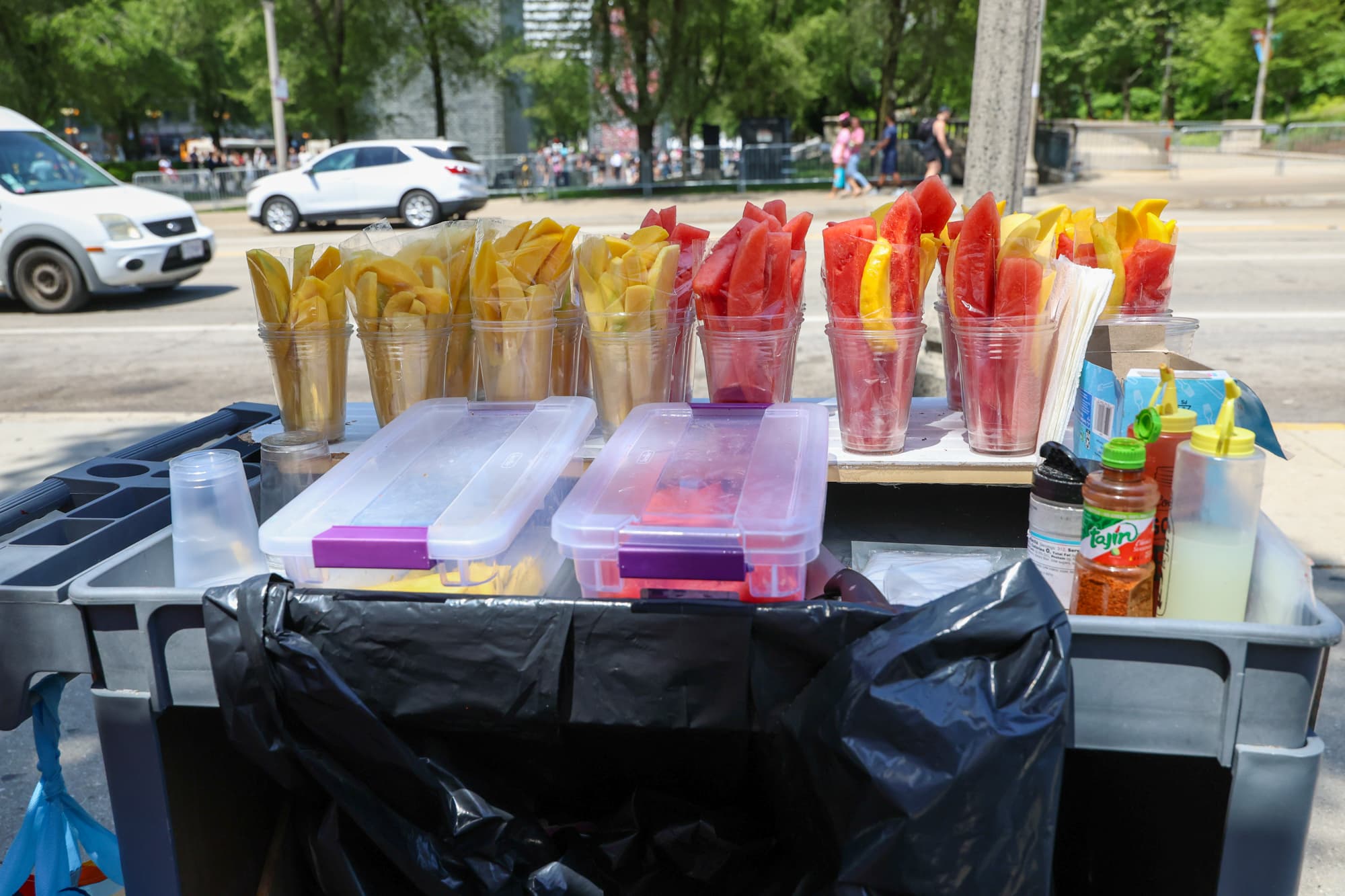
A woman who spent three years selling fruit near Millennium Park is now sitting in a federal detention facility in Kentucky — the consequence of a chain of events that began with a police ticket for operating without a license and ended with an ambush by immigration agents outside a Chicago courthouse.
Norma Salazar Perdomo, an Ecuadorian immigrant, was ticketed on May 5 while vending in the Millennium Park area, charged with a misdemeanor for selling without a license. When she showed up for her first court appearance Tuesday at a West Side courthouse, federal immigration officials were waiting. As Perdomo and her nephew, Fabian Cocha Toapanta, left the building, agents arrested them both. Perdomo is now held in a detention facility in Kentucky; her nephew is in one in Indiana.
The arrest was witnessed by another vendor and quickly spread through Chicago's street vendor community, where it has become a flashpoint in the already tense standoff between the city's recent crackdown on unlicensed vendors and the ongoing threat of federal immigration enforcement.
A Community Left Asking Questions
Chicago police have ramped up enforcement against unlicensed vendors in Downtown's high-traffic tourist corridors in recent months. At least 15 vendors have been arrested over the past few months alone, according to the Street Vendors Association of Chicago. Several incidents have gone viral, including footage of a handcuffed vendor being led away from Soldier Field alongside a crying young child following a concert last month.
For many vendors and advocates, Perdomo's case illustrates a dangerous new reality: that complying with the legal process — showing up to court — can now expose undocumented immigrants to federal detention.
"We do understand it's a prohibited area to vend, but to send them to a place where they know ICE is around and ICE is detaining people, for selling fruit on the street? We don't know who we can trust now," said Maria Ochoa of the Street Vendors Association of Chicago.
Federal immigration authorities have increasingly targeted local courthouses to arrest immigrants — a trend that accelerated following last fall's Operation Midway Blitz enforcement campaign, which rattled Chicago's immigrant neighborhoods. The courthouse setting is particularly alarming to advocates because it ensnares people who are actively trying to follow legal procedures.
City's Licensing Process Draws Scrutiny
The city's vendor licensing system has long been criticized as confusing and difficult to navigate. The process is "extremely burdensome," making it hard for vendors to understand what permits they need and where they are legally allowed to sell, according to a city official familiar with the immigration committee's work. Designated "no peddling" zones exist but are not always clearly communicated to vendors.
The city's public health and business affairs departments have also struggled to coordinate on vendor applications, further complicating the path to compliance. A proposed ordinance that would clarify licensing guidelines — and also impose stricter restrictions on where vendors can operate — has been in development for two years but has yet to be introduced in City Council.
The Mayor's Office said it was "aware of this incident" and was convening officials from relevant departments to respond. A spokesperson said the administration had not directed police to increase enforcement against street vendors and is "exploring potential legislative measures" to improve the vendor licensing ecosystem. The office also reaffirmed its commitment to the city's Welcoming City ordinance, which limits cooperation between local law enforcement and federal immigration agents.
Chicago police did not return a request for comment specific to Perdomo's case.
Fear and Uncertainty Ahead
Perdomo's detention arrives at a moment of compounding anxiety for Chicago's immigrant vendor community — caught between a city crackdown that sends them to courthouses and a federal government that treats those same courthouses as hunting grounds.
With the proposed vendor ordinance stalled and ICE activity at courts continuing, advocates warn the current environment makes it nearly impossible for immigrant vendors to safely resolve even minor infractions. Until clearer licensing pathways exist and the threat of courthouse arrests is addressed, community leaders say many vendors will be left with an impossible choice: risk a ticket on the street, or risk detention by showing up to fight it.