Bronzeville Trail Breaks Ground: South Side's First Elevated Bike Path Is Now Underway
Bronzeville Trail Breaks Ground: South Side's First Elevated Bike Path Is Now Underway
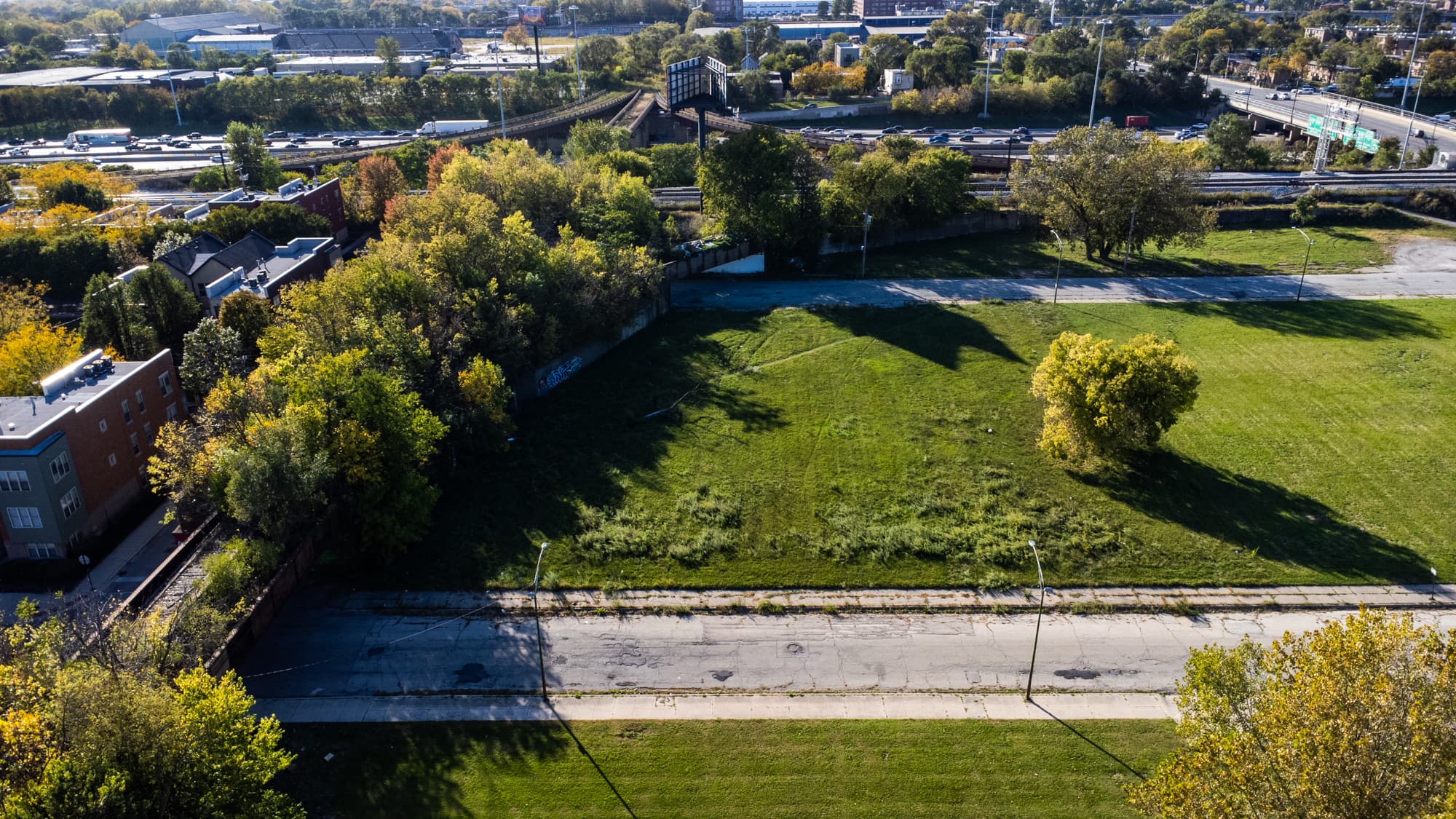
After years of planning, fundraising, and community organizing, the Bronzeville Trail took its first tangible step toward reality Monday when county workers broke ground on environmental soil testing along the former rail corridor that will one day carry cyclists and pedestrians high above the South Side's streets.
The milestone — soil borings at 45th and State Street — may look like routine technical work, but for the Bronzeville Trail Task Force and the neighborhood it serves, it marks the official start of construction activity on a project that promises to reshape the South Side's public landscape. Task Force founder and chairman John Adams was joined by State Rep. Kimberly du Buclet and Bronzeville Community Farm's Rosalyn Owens to mark the occasion.
"The soil borings beginning here at 45th and State Street may look like technical work, but they represent something much bigger," du Buclet said. "It will reconnect communities, create new public space, support health and wellness, strengthen local businesses, and bring new energy to this historic neighborhood."
What the Trail Will Look Like
The Bronzeville Trail will convert roughly two miles of abandoned rail embankment into an elevated public park and bike path, stretching from near 40th and Dearborn east to 41st Street and Lake Park Avenue. An access point near the 41st Street Pedestrian Bridge is planned to link the trail directly to the Lakefront Trail, opening a new gateway for cyclists and tourists to explore the neighborhood's storied blocks.
The project carries a price tag of approximately $100 million — comparable to what was spent building the 606's Bloomingdale Trail in Logan Square, which opened in 2015. Like the 606, the Bronzeville Trail is envisioned as both a health initiative and an economic engine, designed to draw foot traffic, boost local businesses, and generate South Side tourism.
Soil Testing First, Then Removal
Because the rail line has sat abandoned for so long, contamination has accumulated in the soil beneath the embankment, making environmental testing a necessary first step before any removal work can begin. A portion of a $900,000 grant awarded by the Mellon Foundation in 2024 is being used to fund the environmental consultants overseeing the testing process. The MacArthur Foundation is among other private sector donors that have contributed to the project.
A Trail Rooted in History
Organizers are designing the trail with Bronzeville's deep cultural heritage in mind. Plans call for programming and signage that highlight the neighborhood's history and landmarks, including Roberts Temple Church — the site of Emmett Till's funeral and part of the Emmett Till National Monument. With Bronzeville designated as a national heritage area, Adams sees the trail as a catalyst for cultural tourism.
"It's going to literally be a conduit to connect tourists from the Lakefront Bike Trail," Adams said, noting that cycling clubs as far away as Evanston have already expressed excitement about riding into Bronzeville to explore its landmarks.
The trail's greenery will have a neighborhood touch as well: annual and perennial plants will be provided by Bronzeville Neighborhood Farm, whose proprietor Owens said she looks forward to training young people to grow the vegetation that will one day line the elevated path.
Community Input Still Ahead
The task force recently unveiled a framework plan at an open house held at Wendell Phillips Academy, the first of three planned community engagement events. Two more sessions are scheduled for fall and winter. The framework centers on three pillars: Trail Framework Goals, Land Use Framework Goals, and Historic Framework Goals — with community input shaping each over the coming year.
Organizers are also hoping to ride the momentum generated by the nearby Obama Presidential Center, which opened in Woodlawn just last week, bringing fresh regional attention to the South Side.
Looking Ahead
If the project stays on schedule, the Bronzeville Trail is expected to open to the public in 2030. For a neighborhood long underserved by green infrastructure and recreational amenities, that opening would represent more than a bike path — it would signal a new era of investment and connectivity for one of Chicago's most historically significant communities.