Eleven Young Adults Graduate From Restorative Justice Court, Walk Away With Clean Records
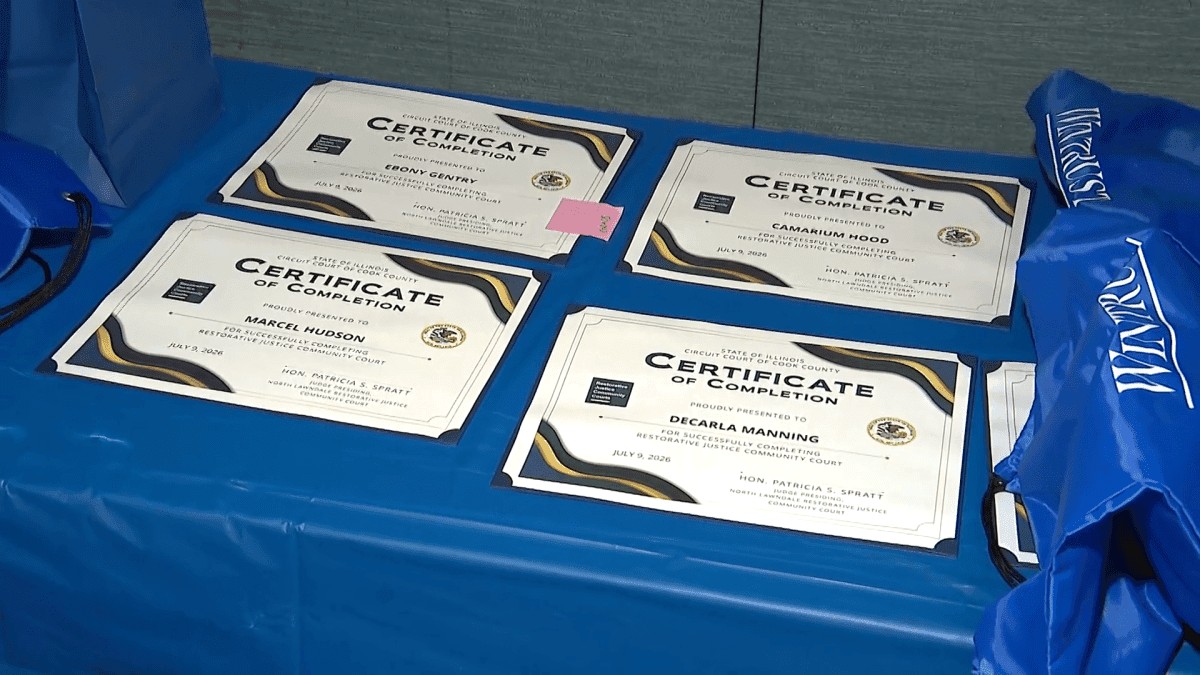
Eleven young adults graduated Thursday morning from Cook County's Restorative Justice Community Courts program in North Lawndale, leaving with dismissed charges or expunged records instead of felony convictions.
The program steers 18-to-26-year-olds facing non-violent felony and misdemeanor charges away from the traditional court system. Instead of a trial or a plea, participants complete community service, job training, counseling and peace-circle discussions where they talk through what happened and take responsibility for it. Finish the program, and the case gets dismissed or the record gets expunged.
Jayda Willingham, 25, was one of Thursday's graduates. Two years ago she was facing a felony charge in Cook County. On Thursday she described the program as the reason she's still moving forward.
"This program was the best program I've ever been in. I thank it for saving my life," Willingham said.
The North Lawndale native said she had nowhere else to turn when she entered the program.
"I really needed that. I was going through stuff at the time, I had nobody to talk to," Willingham said. "It's great people here who help you to get you where you need to be, great resources if you need help with shelter, if you need help with job interviews, if you need help with transportation they help you."
She's already working for the city as a parking enforcement officer.
"I'm already a City of Chicago worker right now, I'm a parking enforcement so my life is already going good," she said.
Cook County Chief Judge Timothy Evans pointed to the numbers behind the program at Thursday's ceremony. He said defendants who go through the traditional criminal court system at 26th and California reoffend within a year at a rate of 65%. Participants who complete the Restorative Justice program reoffend at a rate of 13%.
"The recidivism rate over at 26th and California is 65%, meaning that within one year after completion of a service somebody will reoffend," Evans said. "The Restorative Justice program is 13%."
"It's amazing we're saving lives, we're reducing violence and these young people when they graduate from a service like this, they return to the community as a contributing citizen rather than a convicted felon," Evans said.
There are four Restorative Justice Community Courts operating around Chicago, each based in the neighborhood it serves rather than housed in the central criminal courthouse. The North Lawndale court, where Thursday's graduation took place, is one of them. The model relies on community members, including people who have themselves gone through the criminal justice system, sitting in peace circles with defendants to work through the harm caused by an offense and figure out how to repair it, rather than simply assigning punishment.
Participation isn't automatic. Prosecutors and defense attorneys have to agree to route a case into the program, and defendants have to accept responsibility for the underlying offense as a condition of entry. From there, the timeline and requirements vary by case, but graduation typically means months of check-ins, service hours and counseling sessions before a judge signs off on dismissal or expungement.
For Willingham and the ten others who crossed the stage Thursday, that paperwork is now done. Cook County courts plan to keep running the four restorative justice sites, with new graduation ceremonies to follow as future participants complete the program.