Prime Healthcare to End Baby Deliveries at 3 Chicago-Area Hospitals by October 1
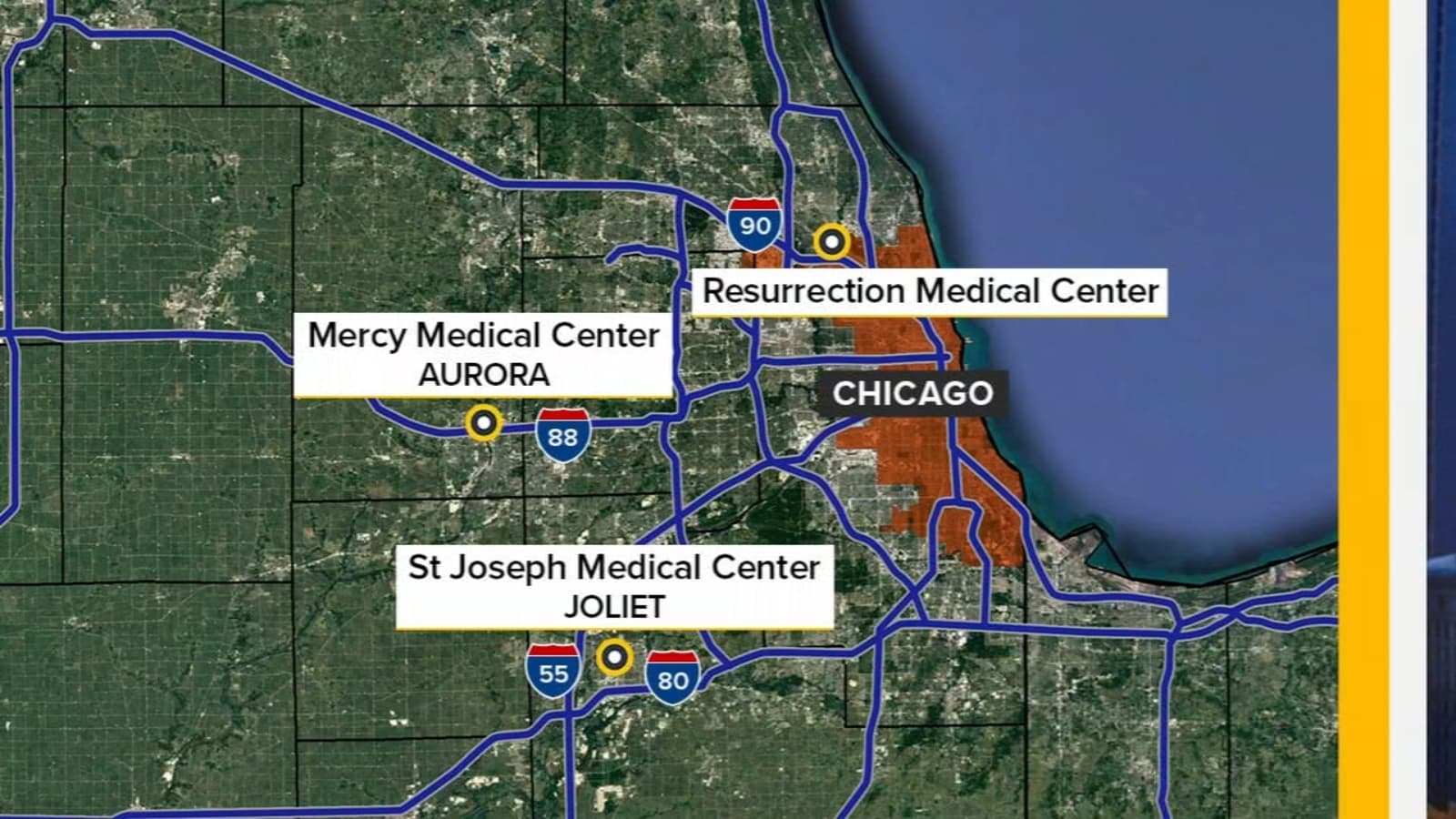
Three Chicago-area hospitals are set to stop delivering babies within a month, a decision from Prime Healthcare that has drawn sharp criticism from a member of Congress and from nurses who say patients in labor could face drives of 30 minutes or more to reach the nearest birthing unit.
Prime Healthcare confirmed it is suspending obstetrics and neonatal care at St. Joseph Medical Center in Joliet, Mercy Medical Center in Aurora and Resurrection Medical Center in Chicago. The company said the closures are targeted for October 1. All three hospitals were formerly part of Ascension Illinois before Prime acquired them in 2024.
Prime said each of the three hospitals averages fewer than one birth a day. Instead of maintaining obstetrics at all of its Chicago-area locations, the company said it will consolidate birthing services at what it calls "Centers of Excellence": St. Mary of Nazareth Hospital in Chicago's Humboldt Park neighborhood and Olympia Fields Hospital in Olympia Fields.
U.S. Rep. Lauren Underwood, whose 14th District covers part of the affected area, met with Prime representatives after learning of the plan and said the company had not prepared adequately for how fast the closures are moving.
"Based on my conversation with them today, Prime does not appear to have adequately prepared for the speedy closures, which are targeted for October FIRST," Underwood said in a statement. "They have made no plans to help moms who will have to travel for care access transportation, or even any efforts to understand how this decision will affect their health."
Speaking from Washington, Underwood said losing birthing access hurts the families who rely on these hospitals and that she believes the decision is driven by finances rather than patient need. She said Prime is aware the move is unpopular and that it breaks an earlier promise made to the communities the hospitals serve.
Prime Healthcare, which operates 10 facilities across the Chicago area, said the finances at the three hospitals could not support keeping the units open. A company spokesperson said delayed investments and neglected operational changes under previous ownership left the hospitals "facing severe financial distress and collectively losing more than $200 million annually." St. Joseph Medical Center alone is projected to lose nearly $69 million in 2026, according to the company.
The spokesperson said the decision followed a yearlong review of every clinical service based on criteria including community need, patient safety, physician availability, workforce sustainability, clinical quality, patient volumes, proximity to other care and long-term viability of the units.
Nurses at the affected hospitals and at St. Mary of Nazareth, which is absorbing patients from the closing units, say the math doesn't account for what happens during an actual emergency. Brenda Hernandez, an ICU nurse at St. Mary's, said patients who would have gone to Resurrection, near O'Hare International Airport, will now need to get on the expressway and drive 30 to 40 minutes to reach a birthing unit.
"It's scary," Hernandez said. "That is a long drive if you are in the middle of an emergency or you have to go into labor."
The closures are also tangled up with a separate labor dispute. National Nurses United, which represents nurses at St. Mary of Nazareth and is currently negotiating a contract with Prime, has scheduled a one-day strike at that hospital for Thursday. The union has pointed to the obstetrics consolidation as evidence that Prime is stretching thin the same facility it's designating as a regional hub for deliveries.
The move follows other hospital cutbacks and closures across the Chicago region in recent years, including the shutdown of West Suburban Medical Center in Oak Park and Weiss Memorial Hospital in Uptown, both of which prompted campaigns pushing for their reopening. Residents and elected officials near those hospitals have said ownership changes, particularly acquisitions by for-profit chains, have led to service cuts in neighborhoods that already have limited healthcare options.
Prime has not detailed what transportation assistance, if any, it will offer patients who are reassigned to St. Mary of Nazareth or Olympia Fields Hospital. Underwood said she raised the transportation and access questions directly with Prime executives and did not receive concrete answers.
With the October 1 target date roughly a month away, pregnant patients currently receiving prenatal care at the three hospitals are expected to be transferred to new providers ahead of their due dates. Underwood's office said it plans to continue pressing Prime for a written plan addressing transportation and continuity of care before the suspension takes effect.