Nuestro Chicago Archives Wants Your Old Family Photos To Save Chicago's Latino History
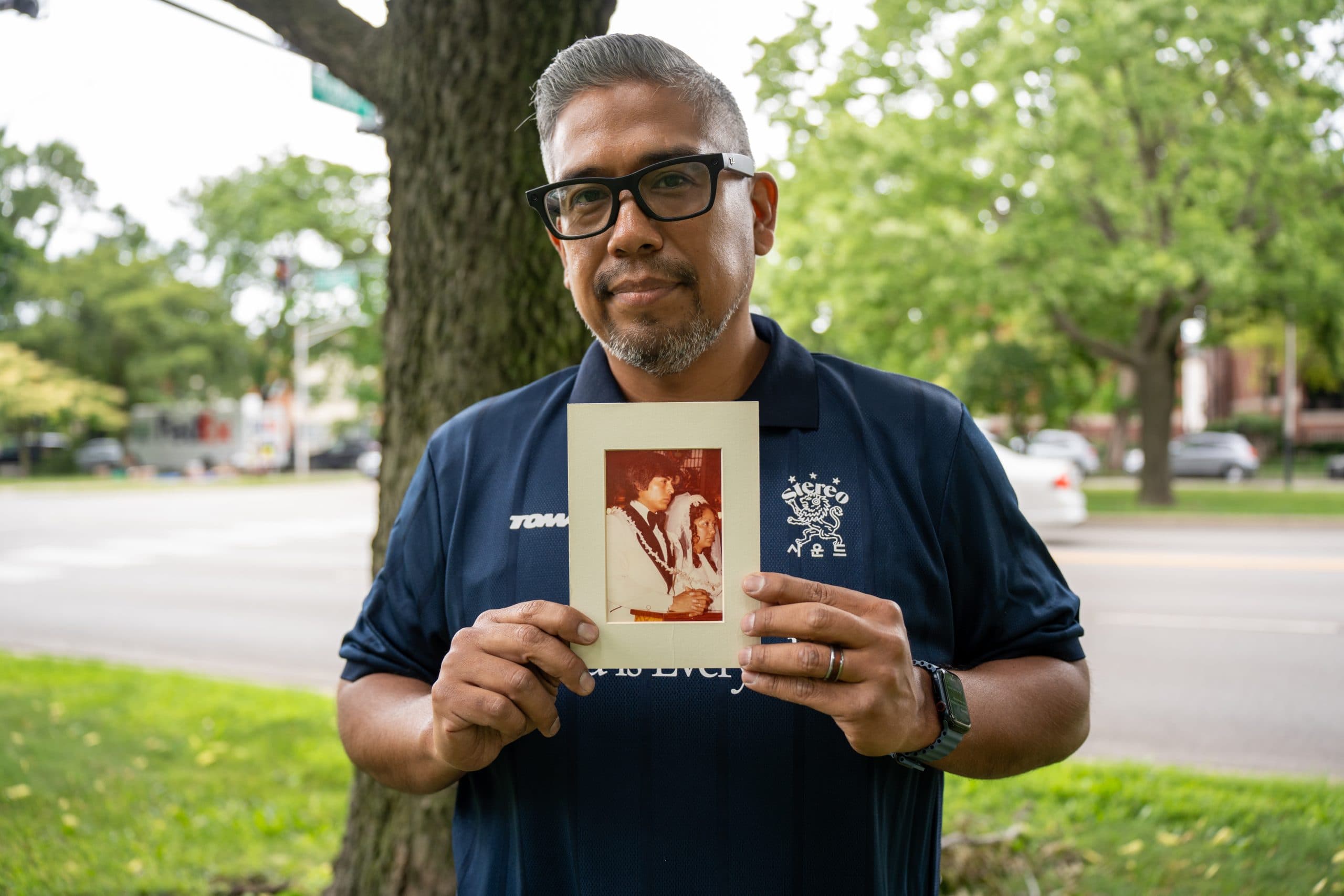
A baptism in McKinley Park. A family gathering before a Mexican Independence Day parade. A protest led by a Latino organizer in Humboldt Park. These are the kinds of images Thais Beltran wants Chicagoans to dig out of shoeboxes and photo albums and send in.
Beltran founded Nuestro Chicago Archives in October 2024 to preserve family photographs documenting everyday Latino life across the city. The project focuses on images taken before 2008, before phones and digital cameras replaced film. A dedicated website launched May 15, and the archive is now collecting submissions from residents citywide through Instagram direct messages and email.
The response has been strong enough that registration filled up quickly for a VHS digitizing event held Saturday at Rudy Lozano Library in Pilsen. The next scanning event is set for 2 to 4 p.m. Aug. 2 at the Little Village Branch Library, 2311 S. Kedzie Ave., timed to a quinceañera photo theme in conjunction with the branch's 15th anniversary. Registration for that event has not opened yet but will be posted on the Chicago Public Library's website.
Beltran, who grew up in Berwyn, traces the project back to childhood visits with grandmother Carmen Gaspar in Little Village, flipping through family albums at her kitchen table. Gaspar spent 40 years as a school aide at Gary Elementary and was one of the first interpreters in the school office, helping families who had immigrated from Mexico register their children for classes.
"She's not just my grandma," Beltran said. "I share her with so many generations of people from La Villita."
Beltran started the archive after coming across similar projects preserving family histories in other cities and noticing Chicago had no equivalent digital space built specifically around Latino family records. The goal, Beltran said, is straightforward: to have Latino Chicagoans recognized as people with names, families and histories worth keeping.
"We're people," Beltran said. "We have families, we have a name, we have a story. See us as that. See us as people."
As submissions come in from around the city, Beltran has also been scanning Gaspar's personal collection, which runs to nearly 2,000 photographs.
Elena Gonzales, curator of civic engagement and social justice at the Chicago History Museum, said the archive addresses a gap in how the city's history has been recorded. Latino communities have been left out of mainstream historical records for more than 150 years, Gonzales said, and filling that gap matters for understanding how Chicago came to be the city it is.
"Community-based archival work is vital because when those records are owned and maintained and protected in community, the community retains the power to use them as they see fit," Gonzales said. "That's powerful."
Gonzales said people often don't realize how much value their own family photographs carry as historical documents. "A lot of times people may have been led to feel that their materials are less important," she said. "And that's just not true."
For some contributors, submitting photos has already changed how they talk with their families. Kiara Jazmin Flores, a first-generation Chicagoan who grew up in Archer Heights, had a box of family photos sitting untouched for years. After seeing a call for images tied to McKinley Park, she submitted baptism photographs from 1995 that included pictures of her grandparents. The submission led to conversations with her mother she had never had before, about where the baptism dress came from, who appeared in the photos, and how the family used to celebrate compared with now.
"Sometimes we don't acknowledge that the time we were kids here in Chicago, it's history," Flores said. "Especially if you're first generation, you're literally starting off as a newborn Chicagoan, in a sense."
Flores later attended the archive's first anniversary exhibit in Pilsen, where photographs from dozens of families lined the walls. Walking through, she recognized pieces of her own upbringing in the faces of strangers.
"Even though they're not my family and I don't know them, I relate to that history. I relate to those photos," she said.
Then she turned a corner and found her own family's photograph hanging among them. "I just burst out crying," she said. Visitors had left handwritten comments beneath the image, responding to a moment they had never lived but recognized all the same.
Beltran said the archive will keep collecting submissions on a rolling basis, with additional scanning events planned at libraries across neighborhoods with large Latino populations. The Aug. 2 event at the Little Village Branch Library is the next confirmed date, and Beltran said organizers are already fielding requests from families who want their quinceañera and baptism photos included before registration opens.