Johnson Orders New Rules and a Task Force to Rein In Chicago's Data Center Boom
Mayor Brandon Johnson signed an executive order Tuesday tightening the rules Chicago uses to review data centers, a move that adds new pollution and noise checks on an industry that has multiplied across the city with little scrutiny until now.
The order, signed at Northerly Island, requires city reviews of data center projects to include new conditions on air pollution permits aimed at cutting emissions from the diesel generators data centers rely on for backup power, along with new noise limits on cooling equipment, generators and other mechanical systems. Reviews will also have to assess power demand, water use, noise and air emissions for data centers built within planned developments, and weigh those effects against pollution burdens already facing the surrounding neighborhood.
Johnson also created a task force, led by Chief Sustainability Officer Angela Tovar and mayoral policy chief Jung Yoon, that has until March 15 to propose a long-term regulatory framework, including changes to city code and department rules. The task force draws representatives from multiple city departments.
"Chicago is a tech hub that embraces innovation, but never at the expense of our health, safety or our natural environment," Johnson said before signing the order. "Chicagoans have been absolutely clear: They do not want data centers expanded across our city without strong protections for their communities, their utility bills, their air, water and their quality of life."
Chicago has about 39 data centers, the buildings packed with servers that handle streaming, cloud storage and the computing behind artificial intelligence tools. Most of them, according to Johnson's office, were approved under rules written before regulators grasped how much power, water and cooling capacity today's facilities actually demand. The city currently classifies data centers as offices under its zoning code, letting most of them get built by right in manufacturing, commercial and non-residential downtown districts without any zoning review.
The executive order is meant as a stopgap while the city rewrites those rules. Johnson's administration is also pushing City Council to pass an ordinance placing a moratorium on new or expanded data centers until the permanent framework is finished, calling the pause "essential to ensure that no new data center development moves forward under an outdated regulatory framework." Any moratorium would need a council vote; the executive order alone can't halt new projects.
Council members have moved on data centers before, but in the opposite direction. In 2024, alderpeople unanimously passed an ordinance designed to encourage data center construction in the city. Asked Tuesday whether his order was a response to council reluctance to reverse that stance, Johnson said the alderpeople who showed up for the signing, including Ald. Lamont Robinson (4th), Ald. Desmon Yancy (5th), Ald. William Hall (6th), Ald. Julia Ramirez (12th), Ald. Ronnie Mosley (21st), Ald. Byron Sigcho Lopez (25th), Ald. Walter Burnett Jr. (27th), Ald. Chris Taliaferro (29th), Ald. Rossana Rodriguez Sánchez (33rd) and Ald. Maria Hadden (49th), showed the council already wants the moratorium and new regulations.
"The data centers of today are very different from facilities contemplated when many of our existing regulations were written," Robinson said at the signing. Hadden said the council "must take swift action to update permitting and regulatory processes for data centers to safeguard the health and resiliency of Chicago."
The order follows a July report from a city working group that City Council commissioned as data center construction accelerated nationwide. That report recommended Chicago require most data centers to go through a zoning review subject to council approval, create a permitting program specific to the facilities, and scrap a restriction that currently blocks public release of energy and water usage data for buildings that house data centers. Two days after a council environmental committee hearing on the report, Hadden introduced an ordinance to lift that disclosure restriction.
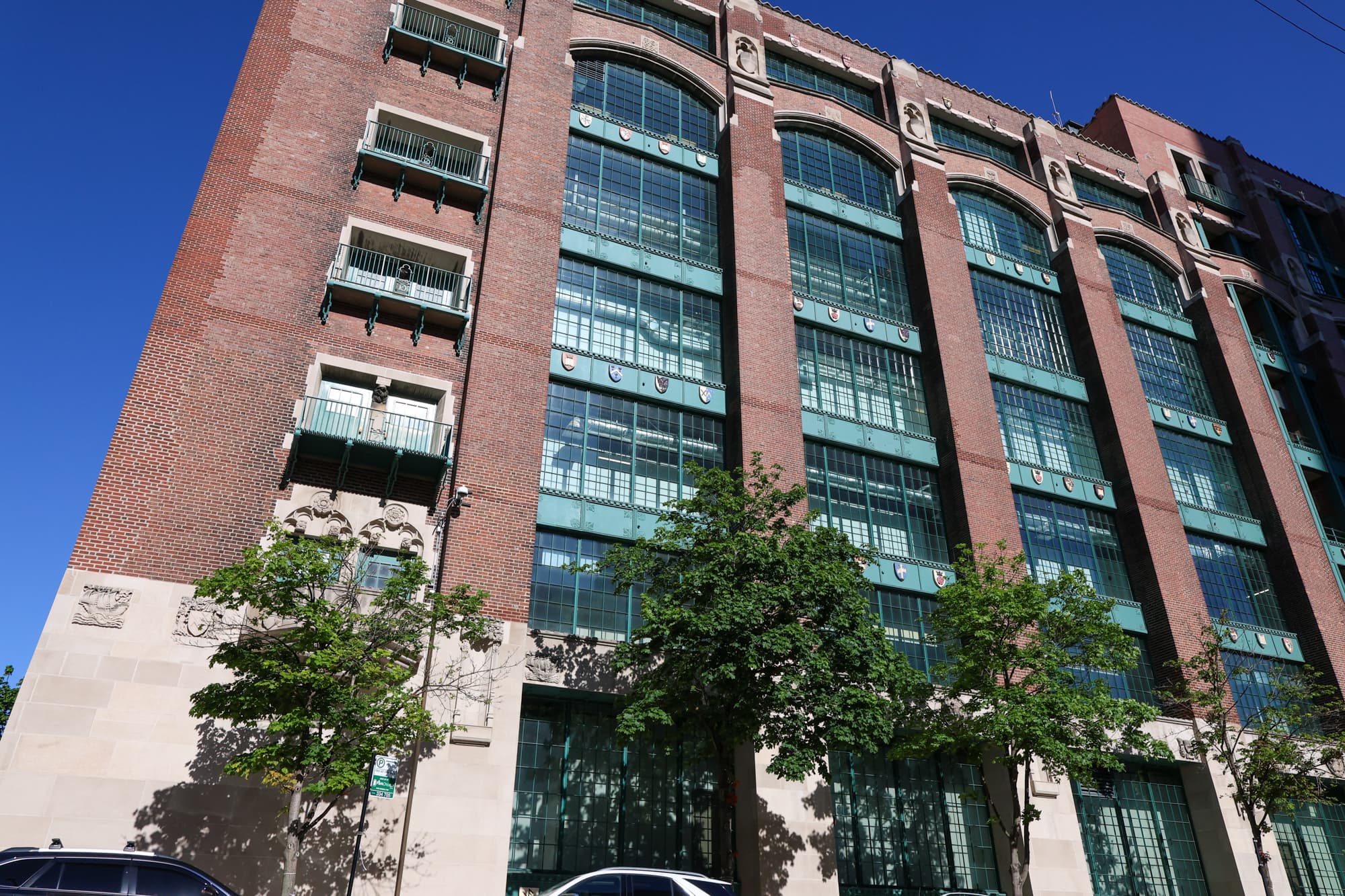
Chicago's data center market, which includes the suburbs, is now the fourth largest in the country behind Northern Virginia, Atlanta and Dallas-Fort Worth, according to real estate firm CBRE. Cook County has 109 data centers with 12 more planned, and seven of the county's 25 largest facilities, operating or planned, sit within city limits. Three are already running: QTS Chicago on South Ashland Avenue, CoreSite's CH1 facility on South LaSalle Street, and Menlo Digital's center on West Polk Street. Larger projects are moving through approval, including Related Digital's proposed one-gigawatt facility on South DuSable Lake Shore Drive and Legacy Investing's 33-megawatt Chicago Byte Exchange, also on South LaSalle.
Companies are drawn to the city for reasons that have little to do with city policy. David Lampert, an associate professor of engineering at the Illinois Institute of Technology, said Illinois' heavy reliance on nuclear power keeps commercial electricity rates lower than East Coast markets, and Chicago's cooler climate lets operators use outside air for "free cooling" much of the year instead of running energy-hungry chillers nonstop. Access to Great Lakes water for evaporative cooling during humid months, plus the city's position along major internet routing paths between the coasts, adds to the appeal.
The city's July report and several aldermen have raised concerns about those same resources: heavy electricity and water draws, generator noise, and relatively few permanent jobs once a facility is built, particularly in neighborhoods that already carry industrial pollution burdens.
The task force's March 15 deadline sets the next real marker. Until then, the new permit conditions and reviews apply, but a full moratorium depends on whether City Council, which unanimously welcomed data centers just two years ago, is willing to vote for one.