George E. Johnson, South Side Hair Care Pioneer Who Built Afro Sheen Empire, Dies At 99
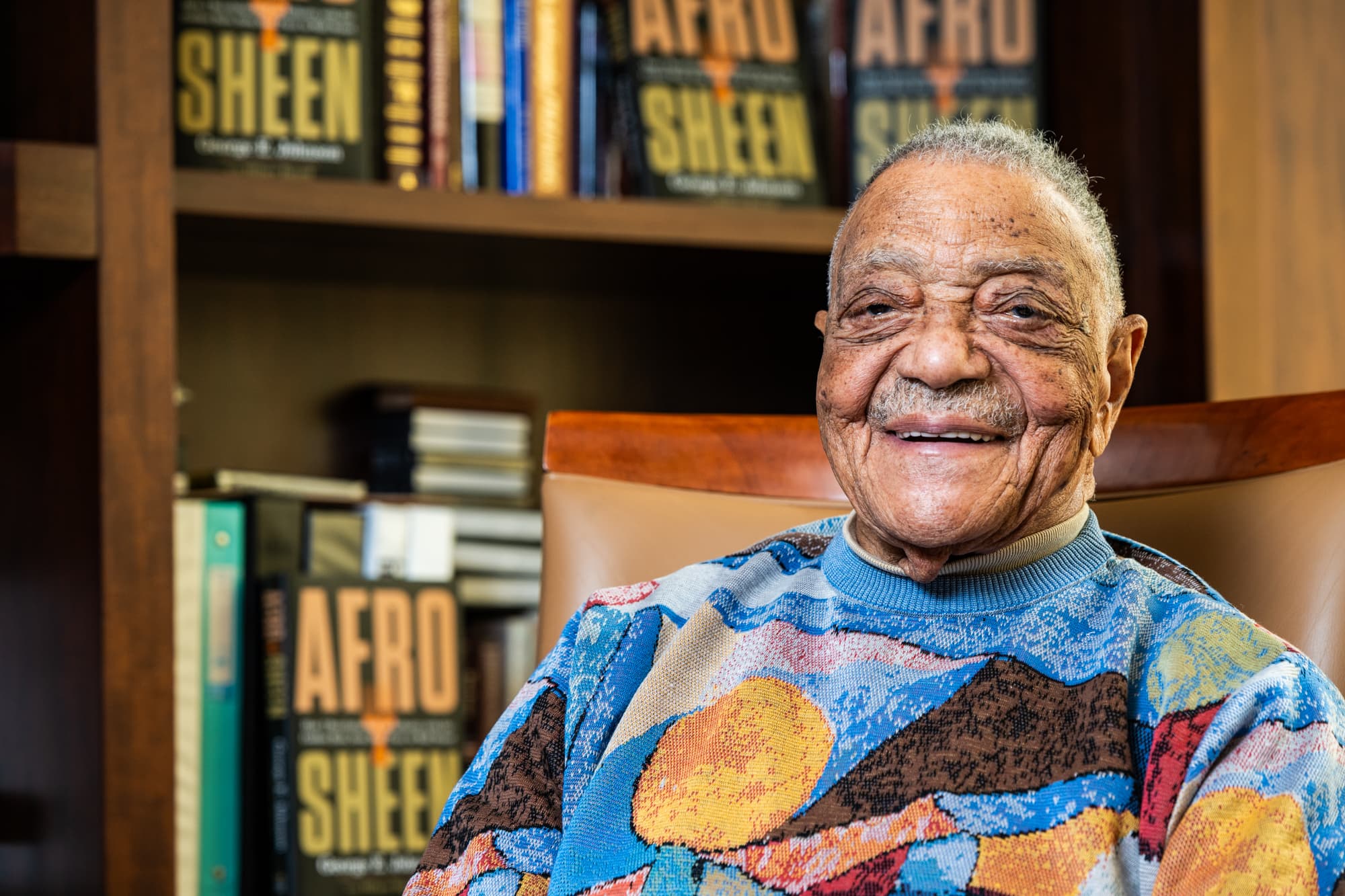
George E. Johnson, the South Side businessman who turned a $250 loan into a hair care empire and became one of the first Black executives to lead a company on a major U.S. stock exchange, died Monday at his Gold Coast home. He was 99.
Johnson's family confirmed his death in a statement, saying he passed away peacefully, leaving behind "an extraordinary legacy of entrepreneurship, faith, perseverance, philanthropy and family."
Johnson and his wife, Joan, founded Johnson Products Company in 1954. The company grew into the first Black-owned business publicly traded on a major stock exchange and became the first national sponsor of "Soul Train," the Chicago-born dance show that grew into the first Black nationally syndicated television program.
"George was a visionary business leader who built a haircare empire, broke barriers on Wall Street, and helped fuel the fight for civil rights," Johnson's family said. "Above all, he was a devoted family man whose example inspired generations and whose legacy of entrepreneurship, community leadership, and philanthropy continues through his descendants today."
Johnson was born in Richton, Mississippi, in 1927 and moved to Bronzeville with his mother and siblings when he was 2 years old. As a boy, he and his brother took on odd jobs around the neighborhood, including beating the blood out of butcher's clothes with their feet and selling cigarette packages to a local junkman for a penny apiece.
"I always knew hard work," Johnson told Block Club Chicago in a profile published last year.
He was a junior at Wendell Phillips High School in Bronzeville when his brother persuaded him to leave school and join him at Fuller Products Company, then run by S.B. Fuller, who Johnson later described as the biggest and richest businessman in Chicago at the time. Johnson said it was at Fuller Products that he learned the values of kindness, togetherness and love that would shape his career.
Johnson and his wife started Johnson Products Company with what became Ultra Wave Hair Culture, a formula that could wave men's hair without burning them. Over the following three decades, drawing on what he learned touring barbershops across the country, Johnson built out a full line of beauty products.
He developed a black rinse neutralizer to stop hair from turning red after Ultra Wave treatments and a cream oil to keep hair soft and shiny. He created Ultra Sheen Cream Satin Press after watching Black beauty salons run large fans to clear smoke from pressing clients' greased hair, and he introduced Ultra Sheen Hair and Scalp Conditioner and Shampoo to cleanse and moisturize. Ultra Sheen Relaxer gave Black women straight hair that would hold up in the workplace even on rainy or humid days, Johnson said.
As the natural hair and Afro movement spread in the late 1960s, Johnson developed Afro Sheen, designed to make Afros easier to style and maintain with a pick. Working with advertising executive Vincent T. Cullers, who was also a Civil Rights activist, Johnson created Afro Sheen campaigns that depicted Black men and women with careers, families and full lives. The ads, including the widely remembered "watu wazuri" campaign, ran in Ebony, Beauty Trade, Essence and Black Enterprise, telling Black readers directly that they were beautiful.
Johnson's business ventures extended beyond hair care. He founded Independence Bank in 1964 and became the first African American to sit on the board of directors of Commonwealth Edison. Through the George E. Johnson Educational Fund, he awarded more than 1,000 college scholarships.
"For George, entrepreneurship was never about simply building a successful business," his family said in Monday's statement. "He truly believed business could be a force for good, creating opportunity, strengthening communities, opening doors for others, and demonstrating that success carries with it a responsibility to serve."
State Rep. Sonya Harper, who represents parts of the South Side, called his passing "a tremendous loss for Chicago, for the beauty industry and for Black America," adding that his legacy extends well beyond the products that bore his name.
Johnson Products Company, at its peak, employed hundreds of workers on Chicago's South Side and gave Black-owned retailers and salons a national brand to sell alongside products from white-owned competitors that had long dominated the market. The company listed on the American Stock Exchange in 1971, one of the first Black-owned businesses to trade on a major exchange.
Johnson sold his stake in the company in the early 1990s, but the brands he built, including Ultra Sheen and Afro Sheen, remain on store shelves today, carried on by other ownership groups.
Funeral arrangements had not been announced as of Tuesday. Johnson's family said further details on services and a public tribute would be shared in the coming days.