Federal Government Moves to Shut Down Evanston's Groundbreaking Black Reparations Program
Federal Government Moves to Shut Down Evanston's Groundbreaking Black Reparations Program
The federal government has thrown its weight behind efforts to dismantle Evanston's landmark reparations program, asking a judge to halt the only initiative of its kind in the United States — one that has already distributed more than $7 million to Black residents who suffered race-based housing discrimination.
What the Federal Government Is Arguing
The U.S. Department of Justice filed a court motion on Tuesday, joining an existing lawsuit that argues Evanston's program is unconstitutional. In its filing, the DOJ characterized the program as "racially discriminatory," contending that distributing financial benefits on the basis of race violates the Equal Protection Clause of the U.S. Constitution.
"There are sound ways for a city to remedy past discrimination or direct resources to its most vulnerable citizens and neighborhoods. Simply handing out money based on race, however, is not the answer," said Harmeet Dhillon, the assistant attorney general overseeing the Justice Department's Civil Rights Division.
About Evanston's Reparations Program
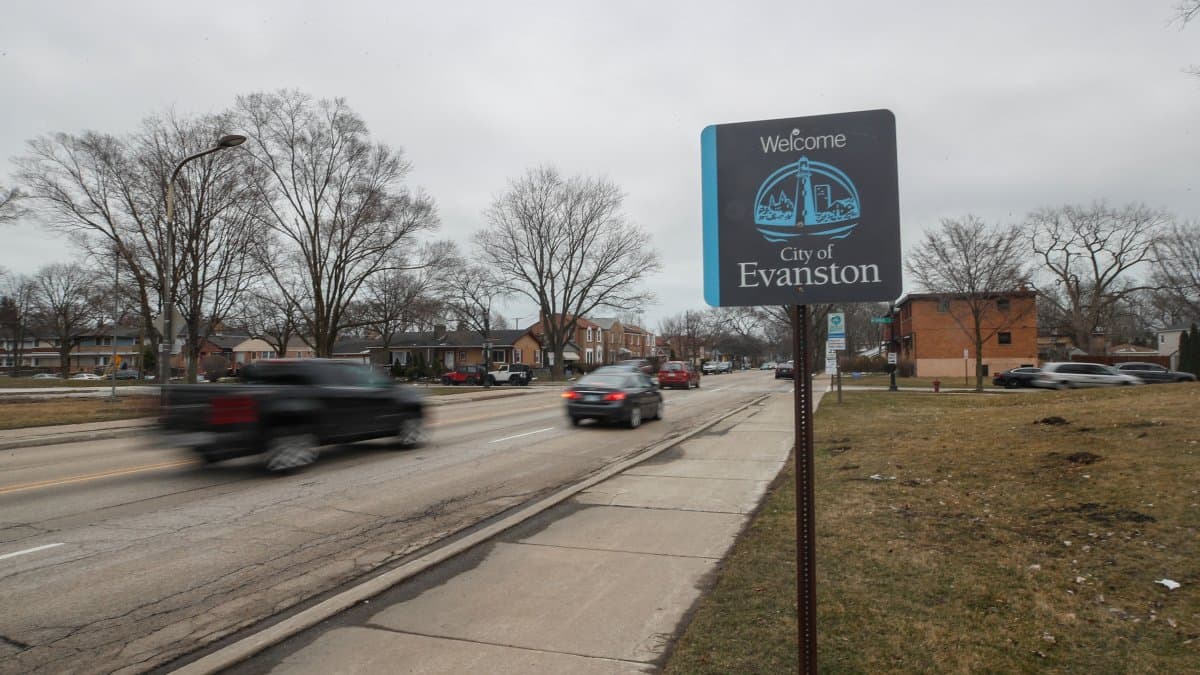
Launched in 2021, Evanston's reparations program is the first — and still the only — formally enacted local reparations program in the country. The initiative allocated $20 million to Black residents, or their direct descendants, who lived in the city between 1919 and 1969 and experienced housing discrimination as a result of city ordinances, policies, or practices. Residents of any race who faced discrimination under city policies after 1969 were also eligible to apply.
Funds are distributed in $25,000 increments and are designated for specific uses including home repairs, down payments on property, and the payment of interest or late penalties on property located within city limits. The program is financed through revenue generated by a local tax on legal marijuana sales.
To date, Evanston has already distributed over $7 million to hundreds of residents — a significant portion of the program's $20 million total commitment.
Approximately 14 percent of Evanston's roughly 76,000 residents identify as Black, according to U.S. Census data. A majority of the city's Black residents live in the historically low-income Fifth and Second Wards.
A Nationally Significant Fight
The federal intervention escalates what was already a closely watched legal battle. Reparations have been a contentious national conversation since the abolition of slavery, but the debate intensified following George Floyd's death in police custody in 2020, which spurred renewed momentum for reparations initiatives across the country. At least five states, including California, New York, and Maryland, along with more than a dozen cities including Boston, Detroit, and Philadelphia, have established task forces or commissions to study the issue — though none have enacted a program as far-reaching as Evanston's.
The DOJ's involvement marks the most significant federal challenge yet to a local reparations effort and is being closely watched by policymakers, legal scholars, and civil rights advocates nationwide.
What Comes Next
With the Justice Department now formally in the case, the legal stakes for Evanston's program have risen sharply. A ruling against the city could not only end the program entirely but could also set a legal precedent that effectively blocks similar reparations initiatives from taking root in other cities and states. Evanston officials have not yet publicly responded to Tuesday's filing, but the city is expected to mount a vigorous defense of a program it has long championed as a model for addressing systemic racial inequality at the local level.