23 of 45 Chicago School Board Candidates Sign Pledge to Ban AI in Classrooms
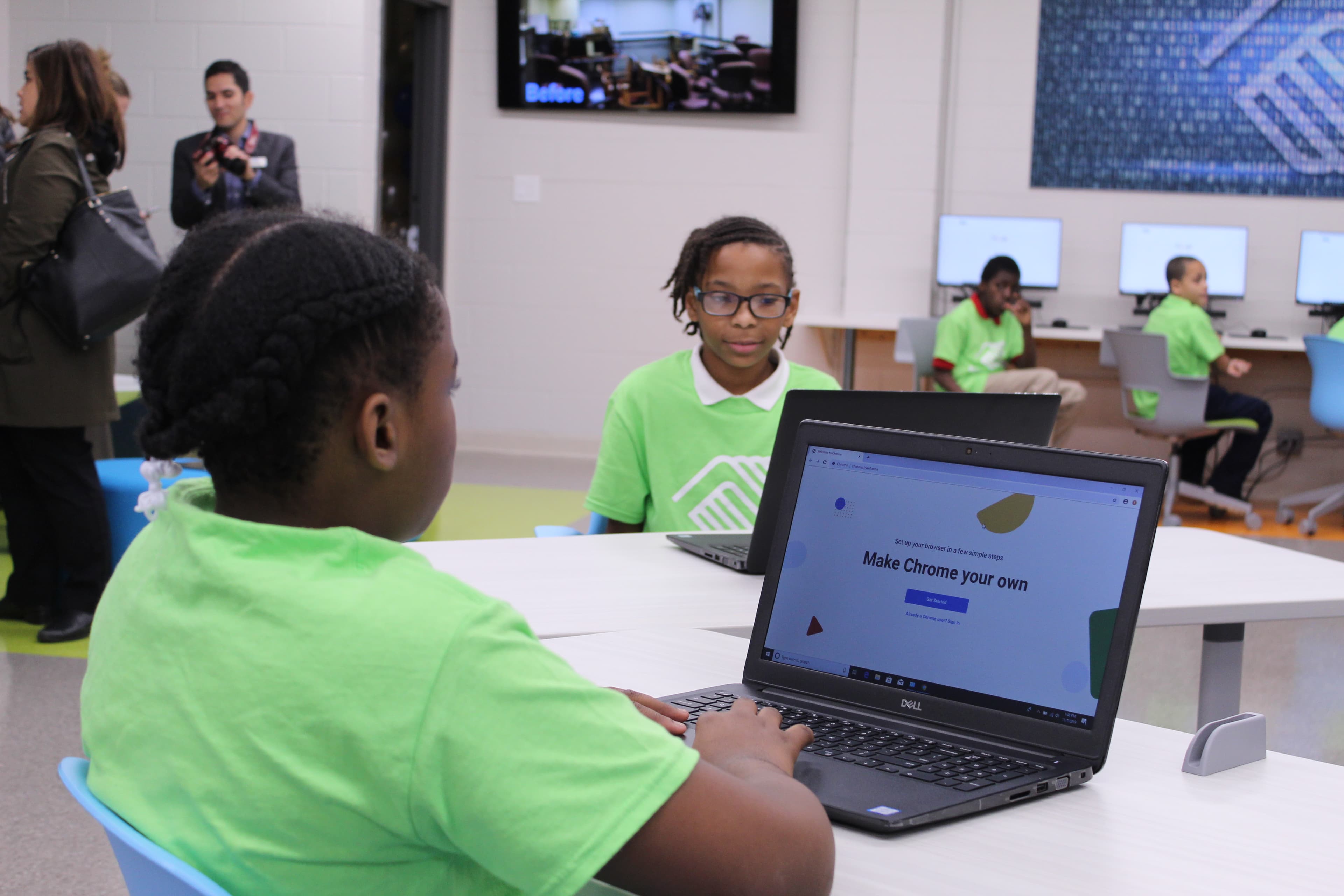
Nearly half the field running for Chicago's school board this fall has agreed to something rare in local politics: a written, yearslong commitment to keep artificial intelligence out of classrooms.
Of the 45 candidates seeking seats on the newly all-elected Chicago Board of Education, 23 have signed a pledge organized by Illinois Families for Public Schools, a parent advocacy group that has spent years pushing for tighter student data protections. The pledge asks candidates to commit to a three-year ban on AI use by both students and educators in Chicago Public Schools. It also calls for eliminating screen time entirely before third grade, limiting it in later grades, creating a chief privacy officer position within the district, and banning the collection of student biometric data, including voice recordings gathered by literacy software.
"The risks of AI are absolutely outweighing the benefits right now," said Cassie Creswell, head of Illinois Families for Public Schools. "It's perfectly possible to have a low-tech education and learn everything you need to know."
Creswell said her group timed the pledge to Chicago's first election in which all 21 school board seats will be filled by voters, rather than partly appointed by the mayor as in past cycles. She said the goal was to lock in commitments from candidates before they take office, though she has also asked the current, partially elected board to weigh AI restrictions of its own this fall.
Creswell said the effort was partly inspired by a Brookings Institution report arguing that AI's potential harms to students outweigh its benefits, and by what she described as years of unchecked spending on classroom technology without proof it improves learning or protects student data. Several other school districts around the country have also moved to restrict AI-powered tools marketed to teachers and reading specialists.
Her organization has specifically criticized Amira, an AI-powered reading tool CPS uses with struggling readers. The district has said Amira has shown promising results as a supplement to traditional instruction.
Not every candidate is on board. Ellen Rosenfeld, running unopposed for the district 4b seat, said she shares many of the pledge's underlying concerns but declined to sign it. "I am concerned that on AI, we are building the plane while we're flying it," she said, adding that she was uneasy committing to a sweeping, multiyear policy without knowing how much authority the board actually has to impose it.
Debby Pope, a board appointee and retired educator running for the district 2b seat, did sign the pledge. She said she worries AI could erode students' ability to think creatively, write on their own, and spot misinformation. But she also said she doesn't want a flat ban to stop the district from teaching students, many of whom already use AI tools regularly outside school, how the technology works and where its risks lie.
Janice Jackson, a former CPS chief executive who now leads the Education and Society Program at the Aspen Institute, said an outright ban sidesteps the district's real job. "I think an outright ban is unproductive, and it really negates our responsibility, which is to come up with better solutions so our kids can both access this stuff, but also so that we don't do irreparable harm to them," she said.
CPS, in a statement, said it remains "steadfast in its deliberate, responsible approach to artificial intelligence" and pointed out that the Illinois State Board of Education's newly released AI guidelines for districts cite the CPS AI guidebook as a model. The district said it "embraces AI's potential to enhance learning while remaining fully committed to safeguarding critical thinking and student data privacy." Officials also said a group of CPS high schoolers spent the summer building a Student Voice AI Council and drafting a Student AI Playbook.
Creswell pointed to a scrapped CPS plan to give high schoolers access to Google's Gemini chatbot as evidence her group's pressure is working. CPS officials pushed back on that framing, saying the Gemini plan was only briefly considered after a small group of teachers tested the tool without student access, and was shelved last May based on teacher feedback so the district could focus on school-by-school readiness and staff training first.
Illinois this year joined a majority of states in passing a law restricting student cellphone use in schools, set to take effect next year. But the state's AI guidance for districts remains nonbinding, leaving no statewide requirement on how, or whether, schools regulate the technology. Other districts have moved faster: the Los Angeles school board, whose superintendent resigned amid a federal investigation into a failed AI chatbot contract, passed a policy this summer banning screen time before second grade.
Whether a CPS-wide AI ban ever takes effect depends on the outcome of November's board elections and how many pledge signers actually win seats. With 22 candidates still unsigned, including at least one running unopposed, the board that takes office in January is likely to arrive divided on the question before it ever votes on a policy.