Chicago Postdoc Researchers Face Visa Limbo as Work Permit Delays Threaten Lab Work
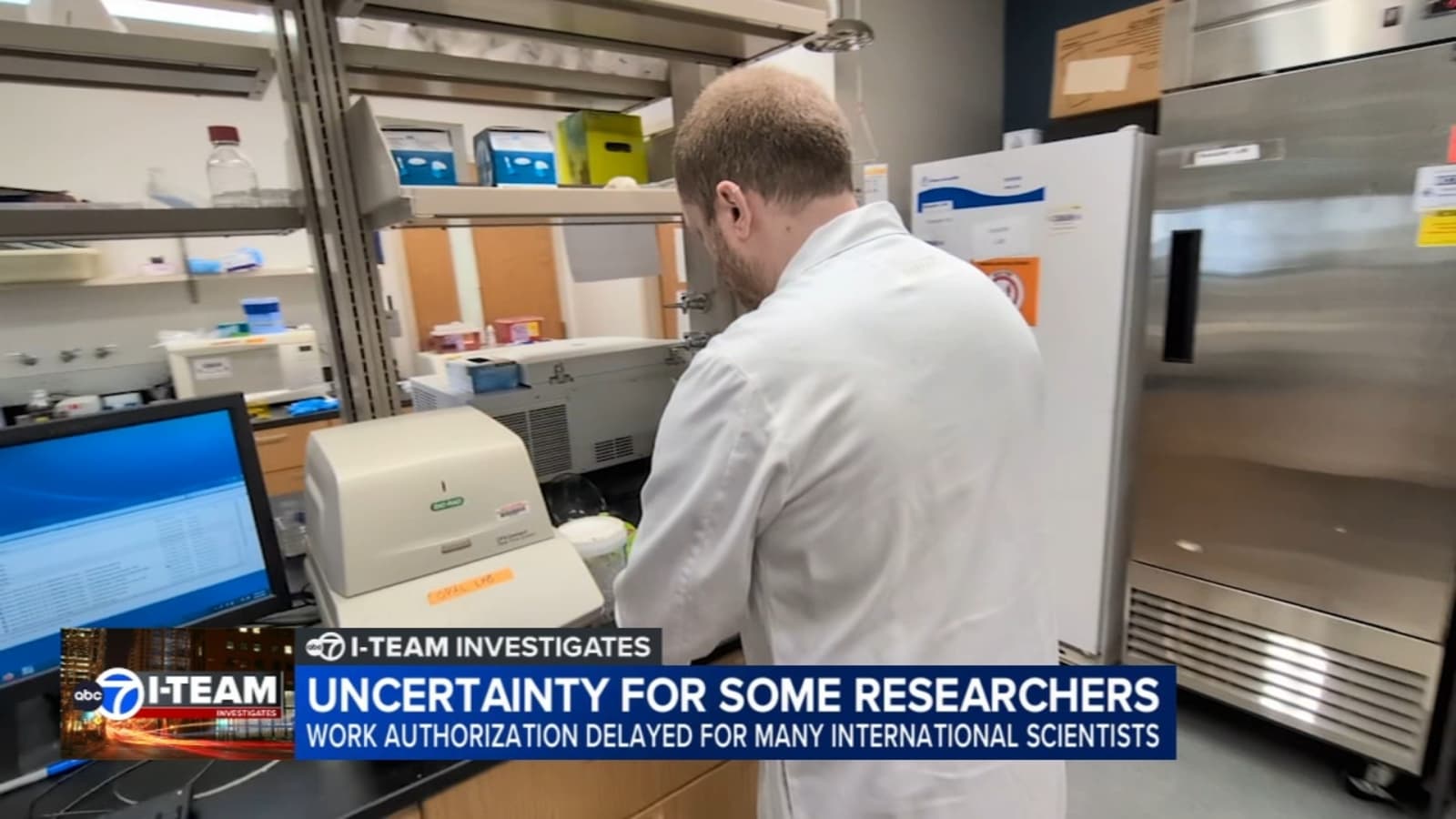
Postdoctoral researchers at Northwestern University who need special visas and work permits to stay employed in the United States say they have spent months in uncertainty, with some warning that entire research labs could stop functioning if their paperwork doesn't come through in time.
Steven Baksa, a postdoctoral scholar and member of the Northwestern University Postdoctoral Union, described the situation bluntly. "Absolutely scary," he said. "It's a situation of like you're in this legal limbo, there's so much uncertainty, and also, as a result, there is a culture of fear, especially in speaking out."
The trouble traces back to the start of President Donald Trump's second term, when the administration paused the processing of renewals for work authorization forms relied on by many international scholars. Those documents allow non-citizen researchers to legally remain employed while they conduct experiments, apply for grants and mentor students in university labs. Without a valid renewal, a researcher's ability to keep working in the country can lapse, sometimes with little warning.
A federal judge ruled in June that the pause in processing was unlawful. But according to researchers at Northwestern, that ruling hasn't solved the immediate problem. There is still no mechanism to speed up processing for scholars whose current authorization is about to run out, leaving them stuck waiting even after a court found the freeze improper.
Caleb Smith, another postdoctoral researcher at Northwestern, said the fallout extends well beyond the individual scientists caught in the backlog. "This is bad for American science in general," Smith said. "These postdocs are the backbone of NU research. They do the experiments, they get the grants, they bring in $700 million a year in funding. So, they're essential to the success of the university."
Smith and Baksa are both members of the Northwestern University Postdoctoral Union, which represents roughly 1,200 postdoctoral scholars at the university. The union says most of its members come from outside the United States. That means a large share of Northwestern's research workforce is exposed to the visa and work permit backlog.
Union leaders say the stakes go beyond paperwork. If work authorization documents expire before renewals are processed, researchers could be forced to stop working, freezing ongoing experiments and putting grant funded projects and lab operations at risk. Baksa said some of the affected researchers are working on cures for serious diseases while also trying to raise families in the middle of the upheaval.
Edward Arnold, another member of the postdoctoral union, said the strain isn't limited to the practical risk of losing legal work status. "The research that you want to do, it makes it so much more difficult, and then just the constant anxiety, like living with that anxiety, is takes a toll on a person," Arnold said.
Universities themselves have limited power to fix the problem. Northwestern, like other institutions employing international scholars, is bound by federal immigration policy and cannot expedite the review of work authorization applications on its own. That leaves administrators, researchers and their union representatives waiting on federal agencies to clear a backlog that built up over months of paused processing, even as the court order technically requires the government to resume normal handling of the applications.
The union says it plans to keep pressing the issue with federal elected officials representing the Chicago area, seeking intervention on behalf of its members. Baksa said the atmosphere of fear has made some researchers reluctant to speak publicly about their own cases, even as the union tries to draw attention to the broader risk facing the university's research operations.
Northwestern's postdoctoral researchers are not the only ones facing this bottleneck. Universities across the country that rely heavily on international scholars to staff their labs have reported similar disruptions since the administration's initial pause. But the scale of Northwestern's exposure, with hundreds of millions of dollars in annual research funding tied to a workforce that is majority international, means any prolonged disruption in Chicago would affect a large portion of the university's research output.
For now, there is no firm timeline for when the backlog will clear or whether individual researchers whose authorizations are set to expire will receive renewals before their legal work status runs out. The union says it will continue to press lawmakers in Washington, while researchers in Northwestern's labs keep working under permits that could expire before replacements arrive.