Chicago Ranked World's Most Climate-Resilient City in New Global Study of 72 Metros
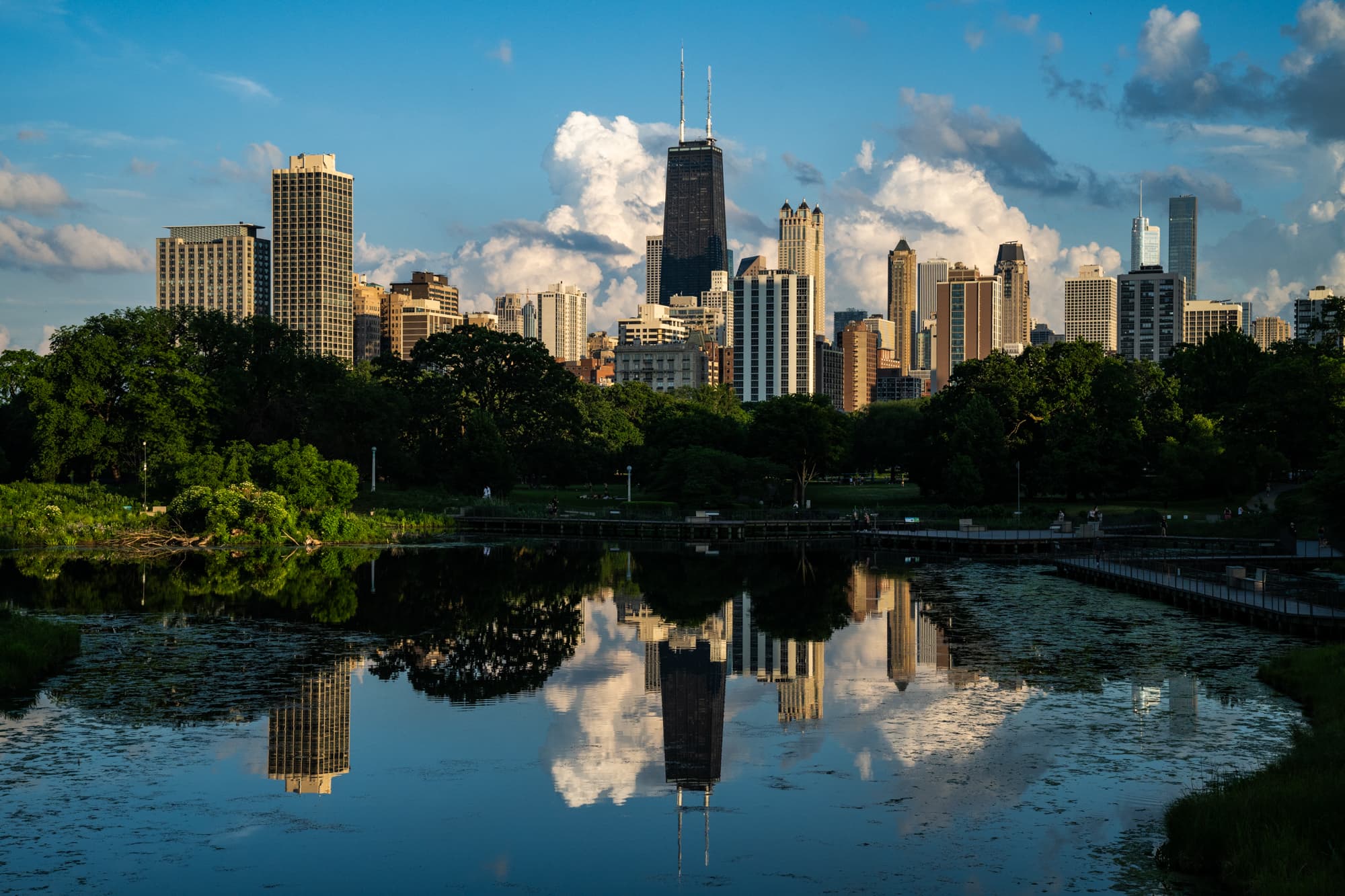
Chicago has been ranked the most climate resilient major city in the world, according to a new global assessment that graded 72 cities on their exposure to climate driven disasters and their readiness to handle them.
The analysis comes from AlphaGeo, a Singapore based artificial intelligence firm that models geographic climate risk. Researchers measured each city's physical exposure to inland flooding, coastal flooding, heat stress, drought, wildfires and hurricane winds, then weighed those risks against each city's capacity to adapt through infrastructure, early warning systems and government policy. Chicago topped the list.
"Chicago is the most resilient major city in this analysis, benefiting from low coastal and tropical hazard exposure combined with robust urban infrastructure," the report states.
Chicago's inland location on Lake Michigan spares it from hurricanes and the sea level rise threatening coastal cities, the report found. No other U.S. city cracked the top 20. Addis Ababa, Melbourne, Barcelona and Ankara rounded out the top five behind Chicago. The report found cities across South Asia dominated the bottom of the rankings because of extreme heat exposure combined with limited adaptation resources. Phoenix landed at 17th from the bottom, among the least resilient cities studied.
Karen Weigert, director of Loyola University Chicago's Baumhart Center for Social Enterprise and Responsibility, said the ranking says as much about the struggles other cities face as it does about Chicago's readiness. Weigert had no role in producing the report.
"It's important to think about Chicago as a place where climate impacts will be less bad than they will be in other places," Weigert said. "It's not that this is a good story; it's more that this is a much less bad story."
Much of the infrastructure behind Chicago's ranking traces back to the 1995 heat wave, which killed more than 700 people over five days. City officials created the Office of Emergency Management and Communications in the months that followed to coordinate between residents and emergency services during extreme weather. The city has also expanded cooling centers, added well being checks for at risk residents during heat waves, and planted more trees to lower temperatures in dense areas.
On flooding, the Metropolitan Water Reclamation District's Tunnel and Reservoir Plan, known locally as the Deep Tunnel, captures stormwater and sewage overflow during heavy rain and stores it underground until it can be treated. The system has run for decades, but this summer tested its limits. In early July, heavy rain and storms pushed the Deep Tunnel to near capacity for the first time, and the city responded by piloting an expanded stormwater storage system on the West Side to catch overflow the tunnel network could not handle.
The city has also built green alleys in recent years. These use permeable pavement that lets rainwater soak into the ground instead of overwhelming the sewer system, with the rest draining into channels connected to manholes.
Those systems have not eliminated flooding or heat risk within Chicago. Rainfall increasingly arrives in short, intense bursts rather than steady patterns, and the city's flat, heavily paved terrain sends much of that water into basements. Heat is also unevenly distributed: neighborhoods on the South and West sides run hotter during heat waves because they have more pavement and less tree cover than other parts of the city, according to prior local climate data. The AlphaGeo report notes its city level scores are averages, meaning individual neighborhoods can carry higher risk than the citywide ranking suggests.
Weigert's assessment lines up with that caveat. Chicago's ranking reflects a comparison against cities facing steeper threats, not a guarantee that its infrastructure will keep pace with worsening storms. The city has not said whether it will expand the West Side stormwater pilot citywide, and the Deep Tunnel system has not yet been tested by a storm larger than the one it handled in July.