Once-Bustling Chicago Day Laborer Corner Sits Nearly Empty as Immigration Sweeps Continue
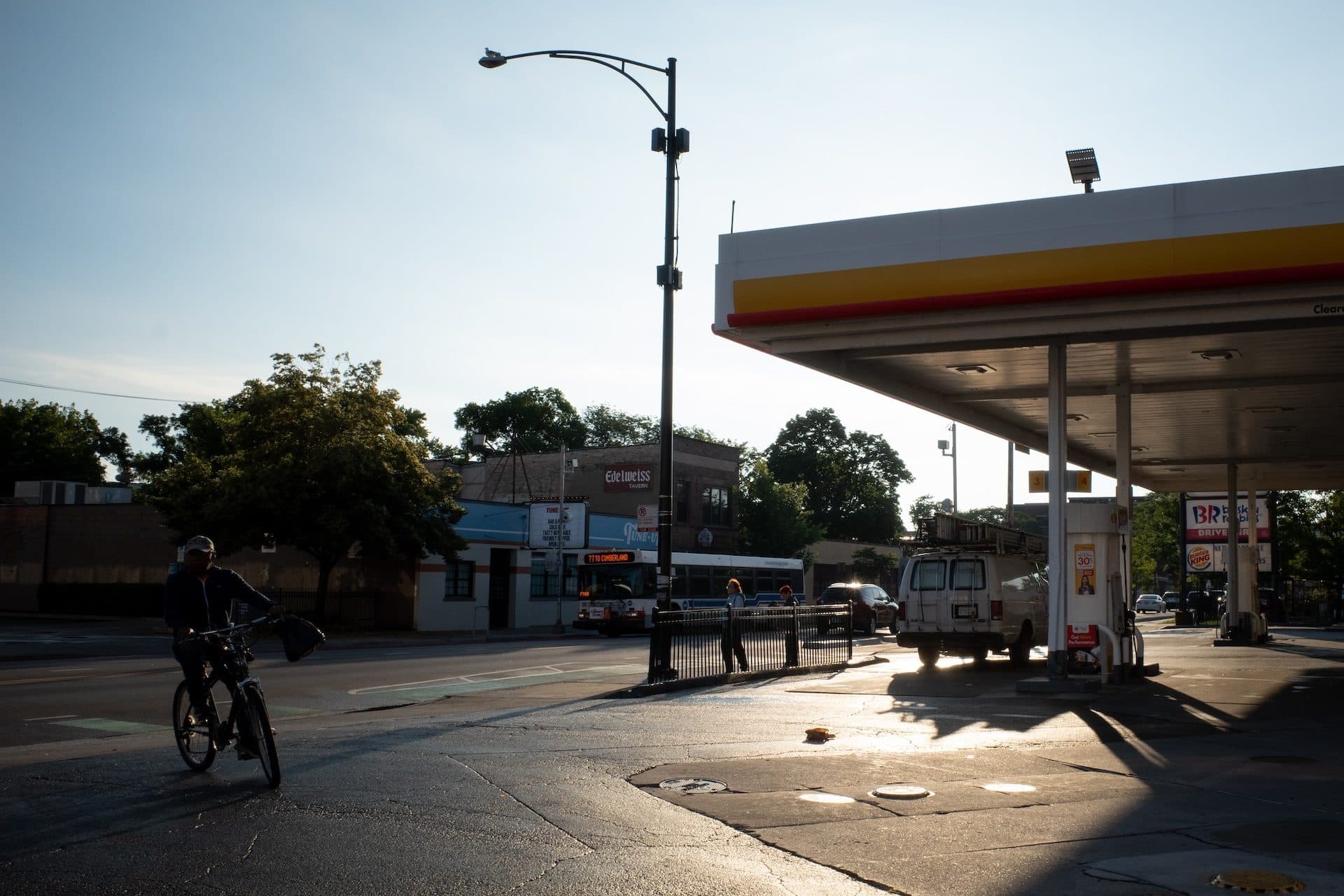
For more than two decades, Gualberto Olac has pedaled his bike to the same corner in Avondale before sunrise, locking it up outside the Shell gas station at Belmont and Milwaukee Avenues and waiting for a truck to slow down and offer him a day's work. He first showed up at 17. He is still there most mornings, sitting on the curb in a sun hat and sunglasses, scanning every car that pulls into the lot.
The corner used to fill with hundreds of men by mid-morning, all hoping to be picked for a few hours of roofing, painting, dishwashing or furniture moving. Now Olac counts a dozen people on a good day, sometimes fewer. The change tracks with a year of escalating immigration enforcement across Chicago and a recent wave of local arrests that have made even standing on that curb feel risky.
The Shell station has been one of Chicago's oldest informal hiring sites for day laborers, a spot where contractors would pull in, negotiate a wage on the spot and drive off with workers for a few hours of labor before dropping them back at the same corner. Olac says that in good years he could land a second job at the same site after finishing a morning gig. That rhythm has broken down over the last twelve months.
Day laborers at the corner trace the decline to Operation Midway Blitz, the federal immigration enforcement push that ramped up in Chicago last fall. Several workers told Borderless Magazine, which first reported on the corner's decline, that the drop in people showing up for work matches a drop in the number of employers coming by to hire them. Fewer workers are willing to risk being out in the open, and fewer contractors want to be seen picking up day laborers who might be swept up in an enforcement action. The result is longer waits for the men who still show up, and no guarantee of work at all.
Chicago police have added another layer of risk. Day laborers at the site said officers arrested three men looking for work there in late June. The corner has always depended on workers being visible and available at a moment's notice, so the arrests undercut that setup directly.
Olac has lived through this before. About ten years ago, federal immigration agents detained him and another laborer at the same gas station. He was released, but the experience changed how he approaches the corner. He no longer walks up to unfamiliar cars. He waits, watches, and lets the driver come to him. That habit, he says, has kept him out of trouble over the past year as enforcement activity increased.
Immigration agents targeted day laborer hiring sites across Chicago for a series of raids last year, with dozens of workers detained, according to earlier reporting from the Chicago Tribune. Those raids pushed day labor corners, long a fixture of the city's informal economy, into public view in a way they hadn't been in years.
Nick Theodore, a professor of urban planning and policy and director of the Center for Urban Economic Development at the University of Illinois Chicago, said the enforcement push "thrust day laborers back into the public consciousness and, of course, put them in the line of fire for immigration raids." Theodore's research on day labor complicates the assumption that these hiring corners are made up mostly of newly arrived immigrants looking for their first foothold in the local economy. He says regular construction workers riding out slow stretches in the industry make up at least an equal share of the workforce, and that during economic downturns, workers pushed out of other jobs turn to day labor to replace lost income.
Theodore said the effects of the crackdown extend beyond the people detained. Workers who still need income but fear showing up at a known hiring site become more vulnerable to exploitation by employers who know they have fewer options. Employers, meanwhile, have grown wary of picking up day laborers in public at all, worried about drawing attention to a hiring practice that has operated in a legal gray area for decades.
For Olac, the calculation each morning is simple: get to the corner, watch the lot, wait to see who's willing to take the risk of hiring him. Some days a truck pulls up. Many days it doesn't. The number of men willing to wait alongside him keeps shrinking, and there is no sign that the police activity or the federal enforcement driving people away is easing. Most mornings, Olac is still there before sunrise, sitting on the curb in his sun hat and sunglasses, watching for a truck that slows down.