Bike Tour Marks Completion of Chicago's First Citywide Memorial to 1919 Race Riot Victims
Dozens of cyclists rode along the lakefront Saturday to the stretch of Lake Michigan where a 17-year-old boy's death in 1919 set off five days of racial violence that killed 38 people and injured hundreds more across Chicago.
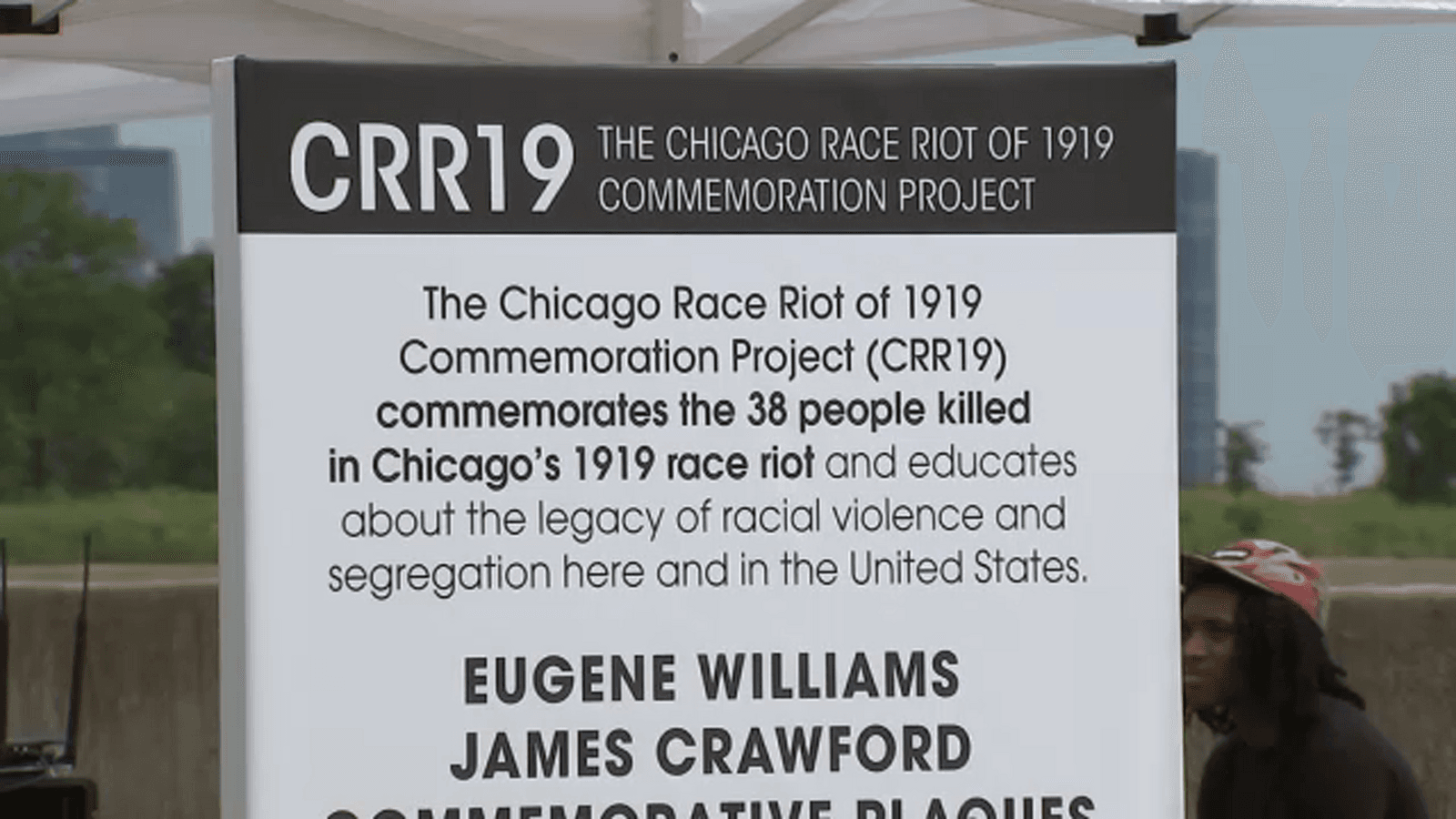
The ride marked the finish of a project that has placed 38 memorial markers across roughly 30 square miles of the city, one for each person killed during the Chicago Race Riot of 1919. Organizers describe it as the city's first citywide memorial dedicated to victims of racial violence.
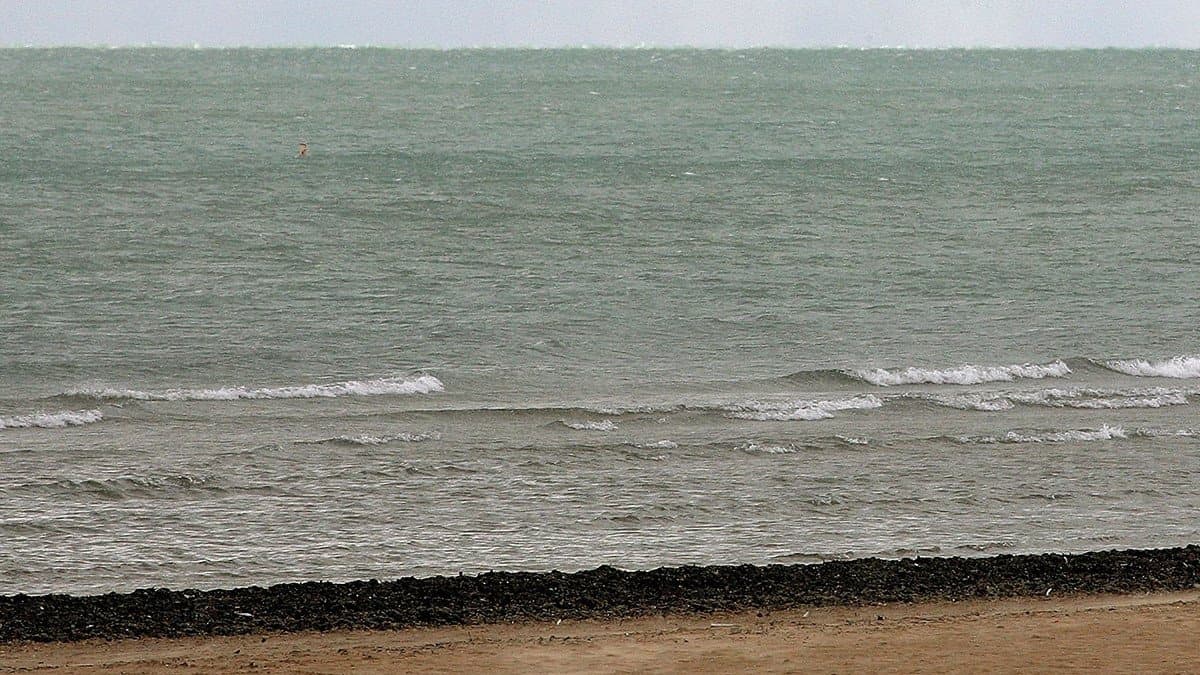
The tour stopped at the lakefront location near 29th Street where Eugene Williams drowned on July 27, 1919, after a white man threw rocks at him and his friends while they swam. Williams and four other Black teenagers had drifted on a raft into water that white beachgoers treated as their own. Their raft had drifted across an unofficial line that separated swimming areas by race at the time.
"So, 107 years ago, a short distance from here, a 17-year-old Black man named Eugene Williams, with four of his friends, went swimming right over here in Lake Michigan on a hot Sunday afternoon," said Peter Cole, a history professor at Western Illinois University, standing near the site during the tour. "And when his raft drifted southward to approximately this location, a white man standing where I'm about started throwing rocks at these children and killed one. Eugene Williams was murdered."
No one was arrested for Williams' death at the time. Police at the scene instead detained a Black man on an unrelated complaint, and word of the killing and the lack of any response from officers spread quickly through the South Side. Within hours, fighting broke out between Black and white Chicagoans, and it continued for days, spreading through neighborhoods near the stockyards and the Black Belt before Illinois National Guard troops helped restore order. By the time it ended, 23 Black residents and 15 white residents were dead, more than 500 people were injured, and roughly 1,000 families, most of them Black, had lost their homes to arson.
The marker project, run through the Chicago Race Riot of 1919 Commemoration Project, spent years researching where each of the 38 victims died and placing a marker at that exact location rather than grouping them at a single memorial site. Dr. Franklin Cosey-Gay, co-director of the project, said the design was deliberate.
"These markers form Chicago's first citywide memorial dedicated to the victims of racial violence," Cosey-Gay said at the event.
Kenya Merritt, commissioner of Chicago's Department of Cultural Affairs and Special Events, said spreading the markers across the city rather than concentrating them in one park or plaza was meant to keep the history tied to the specific streets, yards and lakefront blocks where it happened.
"We ensure that every person who lost their life during the Chicago Race Riot of 1919 is remembered where that life was taken, not erased in time, not reduced to just some simple footnote, but permanently woven into the landscape of our city," Merritt said.
Cole said the swimming areas along the 1919 lakefront were one of many informal but strictly enforced racial boundaries in the city at the time. Those boundaries also governed housing, jobs and public space in neighborhoods far from the water. The riot came during what's often called the Red Summer, a period in 1919 when dozens of American cities saw racial violence as Black veterans returned from World War I and Black families moved north during the Great Migration, competing for jobs and housing in cities that had few protections for them.
Saturday's ride traced a route connecting several of the 38 marker sites. The route ran beyond the lakefront into the stockyards district, the Black Belt around State Street, and residential blocks on the South Side where homes were burned. Cyclists stopped at multiple points along the way as historians described what happened at each location.
The marker project's completion follows years of debate in Chicago over how the city should mark its history of racial violence and segregation, including the 1919 riot's role in shaping the boundaries of South Side neighborhoods that persist today. The riot has drawn renewed attention in recent years, including through a 2022 documentary and academic research into the event's lasting effect on housing patterns on the South Side.
Organizers said they hope the markers become a fixture for school field trips, walking tours and cyclists retracing Saturday's route on their own. They said the goal is for Chicagoans to encounter the history block by block rather than through a single monument. The Chicago Race Riot of 1919 Commemoration Project has not announced additional events tied to the markers beyond Saturday's ride, though Cosey-Gay said the group plans to work with schools on curriculum tied to the sites in the coming school year.