CDOT Studies Fixes for Edgebrook's Tangled Rail Crossing After Years of Traffic Backups
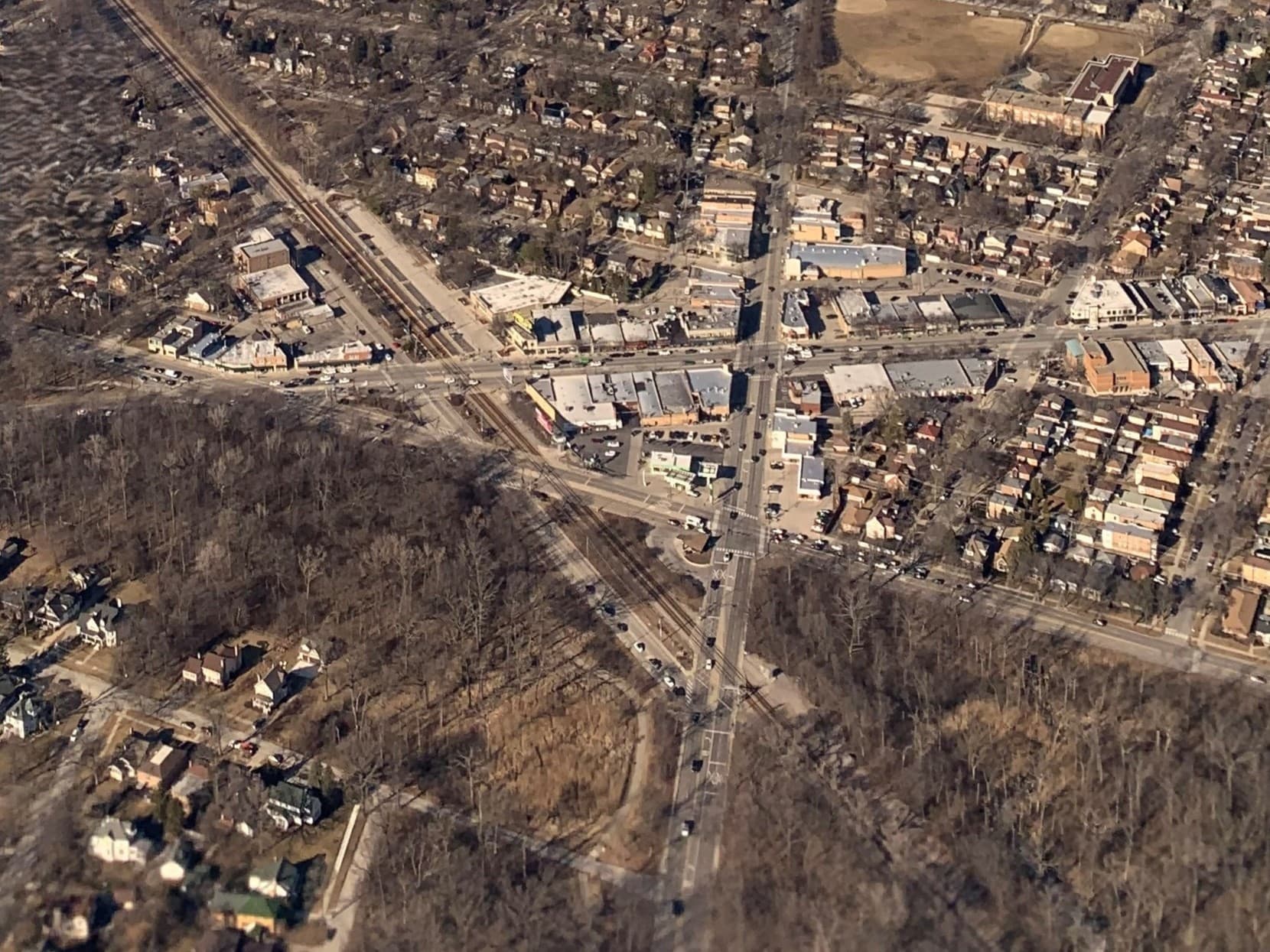
Don Marchman has lived in Edgebrook for 35 years, and he says he can tell what's causing a traffic backup in his neighborhood without even looking. It's either a crash or a train.
That familiar frustration is now the focus of a formal city study. The Chicago Department of Transportation held a community meeting Wednesday night at Edgebrook School to gather input on how to fix the Devon-Caldwell-Central-Lehigh intersection cluster, a snarl of four roadways and six intersections split by a Metra rail line near the Edgebrook Metra Station.
The department is calling the effort the Access Edgebrook Planning and Environmental Linkages Study. It is the first formal study aimed at this intersection, which has ranked among the city's most troubled for years. About 60 residents showed up to share ideas on comment cards and sticky notes, and Alds. Jim Gardiner (45th) and Samantha Nugent (39th), whose wards border the area, attended as well.
"The area presents a lot of challenges and we are just trying to see what we can do," said Lindsey Frey, planning team lead for the Chicago Department of Transportation.
The options on the table range widely in scale and cost. On the smaller end, the department is considering bike lanes, curb bumpouts and retimed traffic signals. On the larger end, officials are weighing a rail overpass that would lift the Metra line above the roads, or an underpass that would send the tracks below ground. Frey said either of those bigger fixes could take 10 years or more to build.
Chicago Department of Transportation records show 499 crashes in the study area between 2019 and 2023. The intersection cluster landed near the top of a list the department compiled roughly eight years ago through a project called Complex Intersections, which gathered data on 100 of the city's most difficult crossings.
Residents at the meeting had their own theories about what would work best. Sandra Laase, who has lived in Edgebrook since 1980, said traffic has worsened as more freight trains have started using the tracks in recent years. Dan Melnyk, who has lived in the neighborhood 16 years, said running the tracks underground would be the "prettiest option," and suggested a park could be built over the buried line. He said he thinks the current congestion keeps people away from Edgebrook's small business strip, which has lost shops in recent years.
Marchman isn't convinced an underground option is realistic. He said digging below grade could run into utility conflicts, and that an overpass, while cheaper and simpler to build, might end up dividing the neighborhood instead of connecting it. His preferred fix is more modest: move the Edgebrook Metra Station a few hundred feet away from Devon Avenue so stopped trains don't block the road in the first place.
The area draws more than just commuters. Its proximity to the North Branch Trail and nearby forest preserves brings a steady stream of cyclists and hikers through the same intersections that back up with car traffic and idling trains.
Ald. Nugent told residents the delays go beyond an everyday annoyance. "These delays are more than an inconvenience," she said. "They affect our businesses, our emergency response times and the quality of life in the neighborhood. I hope that the feedback provided here is a catalyst for some meaningful change."
Frey said the department will take everything gathered Wednesday and use it to sketch out a range of options, along with estimates of what each would cost, how long each would take and how feasible each is to build. The Chicago Department of Transportation plans to bring that information back to residents at a second community meeting this fall.
After that meeting, the department intends to apply for federal funding to cover a phase one study that would help narrow the options down to a single approach. Once a final design is chosen, the department will seek additional federal funding to build it.
"We're really taking all ideas at this point," Frey said. Residents with suggestions can reach her directly at lindsey.frey2@cityofchicago.org. The next public checkpoint comes this fall, when the department presents its narrowed list of options and cost estimates to the neighborhood.